
Posted in Travel

Never Too Old For A Trip To The Zoo

Dinosaur at Bristol Zoo“The lions are on form today,” I thought, marvelling at how far their roar appeared to be carrying across Bristol Zoo‘s exceptionally beautiful botanical gardens.

And then I saw it: the first big dinosaur in their new animatronic display, brought in to spice up summer holiday trips to the zoo. There are about a dozen of them  on the loose. Most are camouflaged among the spectacular planting, positioned so that you never see a whole one all at once. You first spot a foot or a snout of a tail, before realising you are dwarfed by a monster.  Zoological gardens? Jurassic Park, more like. They certainly put the lions in perspective. And not just the lions, either. These lifelike giants put man in his place too.

Gerald Durrell statue 2
My hero

Like most right-thinking people, I’m not a fan of caging animals, but in the case of zoos that focus on conservation, I’m prepared to make an exception. Last  year, I made a pilgrimage that I’d been planning for decades to the former Jersey Zoo, now simply known as Durrell, in honour of its founder. Gerald Durrell was a pioneer in animal conservation. When I was a teenager, he charmed me with the killingly funny stories about his eccentric family in “My Family And Other Animals” and infected me with his passion for wildlife conservation. There were tears in my eyes as I crossed the threshold of his zoo. The love, humility and compassion with which the park had been planned made for an emotional visit.

Bristol Zoo's old polar bear pit
Bristol Zoo’s old polar bear pit, long since gone

On its launch, it was one of a kind, but since then all decent zoos have followed where Durrell led. Bristol Zoo was not always so. When I first visited around 1978, there were still animals turned half mad by inappropriate cages. Particularly distressed (and distressing to see) was a beautiful polar bear, endlessly pacing and turning, pacing and turning, along the back wall of its cage. When the bear died of old age, it was thankfully not replaced.

Now, the zoo is apologetic for its past. There are sad memorials to the past errors of its ways. Poster about old bear pole at Bristol ZooThere are the remains of the bear pole, a modest branchless tree trunk that bears once used to climb, to the amusement of the crowd. A notice on the seals’ enclosure, once the site of that pathetic , yellowing polar bear, remarks that in those days, the animals’ cages were designed to be as easy as possible for the keepers to clean. My jaw drops at this revelation, even though I’m old enough to remember when it was considered perfectly acceptable to offer chimpanzees’ tea parties as a visitor attraction and to use them to make advertisements for tea. Rumour had it they were given chewing gum to make it look as if they were talking, northern accents dubbed over the top to give them memorable conversations. So by modern standards it was politically incorrect in terms of the north-south divide too! There were memorable catchphrases.

Still from PG Tips advert using chimpanzee Mr Shifter“Can you ride tandem?”

“Cooee, Mr Shifter!”

“Do you know the piano’s on my toe, dad?”

They certainly shifted tea sales. (Click here to see some clips.)

Thankfully, those unenlightened days are long gone. Bristol Zoo now goes to the opposite extreme. Everywhere you go there are reminders of man’s responsibility to respect and preserve the natural world. There are shocking displays of illegal hunters’ trophies and animal-based Chinese medicines. There are samples of products and labels denoting sustainable sourcing of wood and fish.

My daughter Laura tackling Zooropia elevated walk at Bristol ZooThere is also humiliating evidence of how feeble we are, compared to the rest of the animal kingdom. Above much of the park runs the relatively new Zooropia attraction – a series of telegraph poles connected by all kinds of walkways raised high above the ground. Visitors are invited (for a small fee) to negotiate narrow wires, ropes,  tyres and wooden bridges. Despite being securely attached to a safety harness, first-timers quake at the elevation, at the difficulty of their path, and at the thought that missing their footing could send them tumbling from a great height into the gorillas’ enclosure. Each path is named after a particular animal that would make short work of the challenge – another reminder of man’s inferiority in athletic terms.

There’s also a compelling series of challenges scattered about the zoo, united by the topical theme of the Zoolympics. You are invited to compare your  abilities with that of the animal kingdom. How long can you stand on one leg? Ten seconds? Twenty? That’s nothing compared to the flamingo, which does it for hours at a time. How far can you reach with your arms? Not a patch on the albatross’s wingspan of three metres. How many times can you flap your arms in a minute? Nowhere near as many as the tiny hummingbird’s 5,400 wingflaps per minute (hence the hum from which it gets its name). Don’t expect to emerge with any medals from this competition (though if you want to feel better about your athletic prowess, comfort yourself with a visit to the sloth).

Laura makes friends with an animatronic dinosaurIt’s good to see young visitors really engaging with these challenges and learning a profound respect for the rest of the animal kingdom. But will the presence of all these dinosaurs confuse them, I wonder? Many of them are too young to differentiate between an animatronic and a real animal. They may go away thinking that all the animals are real, including the dinosaurs, or that the all the Zoo’s residents are pretend. (I remember when, at Laura’s age, I visited Disneyland in California, I was convinced that not only were the mermaids we saw were real, but also the working model of Abraham Lincoln, and that used much less sophisticated technology.)

I’m grappling with this problem, berating the Zoo in my mind for playing a foolish trick for the sake of increasing gate takings, when it occurs to me that actually it’s a rather cleverer idea than I’d first realised. For surely, the lesson to be learned here is that if mankind isn’t more careful in future, many other residents of the Zoo will be relegated to the status of the dinosaur: extinct.

It’s not pure whimsy that guided my hero Gerald Durrell’s choice of animal statues to welcome visitors to  his Zoo. Ladies and gentleman, I give you the dodo.

Statue of Dodo (Raphus cucullatus), entrance o...
Statue of Dodo (Raphus cucullatus), entrance of Jersey Zoo, Jersey. (Photo credit: Wikipedia)

If you enjoyed this post, you might like others about our trip to Jersey: Have Hairdrier, Will Travel and What Size is Your Jersey?

Or these about other family days out to the SS Great Britain and the Roman Baths at Bath. 
Posted in Travel

All Aboard for A Trip Back In Time

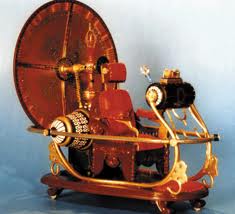
H G Wells' Time Machine“Can we travel back in time, Mummy?” asks my daughter Laura (9) as we set off for the next tourist attraction on our agenda.

We’re part way through a two-week visit from the 16 year old daughter of my old schoolfriend, an American who I met at school in Germany (yes, it’s complicated) . It’s her first trip to England and we’re trying to give her an accurate snapshot of British life and culture.

So far this has included:

– a very large quantity of rain

– seeing a live recording of “With Great Pleasure”, a BBC Radio 4 programme with the wonderful but anarchic performance poet John Hegley (what other Radio 4 programme would conclude with inviting the audience up on stage to dance to Kirsty MacColl’s “A New England”? Spot on for my agenda, Mr Hegley, so thanks for that!)

– the usual suspects for this neck of the woods: Stonehenge, Castle Combe, Tintern Abbey, the Roman Baths, etc etc

Launch of the SS Great Britain, the revolution...

Today’s destination is the SS Great Britain, lovingly and expensively restored to replicate mint condition. Brunel’s groundbreaking ship is now in dry dock in Bristol’s Floating Harbour, the very dock from which it was launched in 1843. It was rescued from the Falklands in 1970, where it was languishing after a long and varied career and refusing to sink, and returned to base. Movingly, its homeward journey included passing for the first time ever beneath one of Brunel’s many other masterpieces, the Clifton Suspension Bridge – something it had never done before, as the bridge was not complete when the SS Great Britain first (and last) sailed out of Bristol.

English: Clifton Suspension Bridge. Looking so...

As we enter the museum shed – the overture to boarding the ship itself – I spot a sign that echoes Laura’s request. “Travel Back In Time!” it invites us. Cleverly, the museum is arranged in reverse chronological order, so that we first see evidence of the ship’s return to Bristol, then pass back through its previous incarnations during the Second World War, on the Australian Gold Rush run, and on trips around Cape Horn to the Pacific coast of America.

Laura in Victorian dressBy the time we’ve passed down to the far end of the museum, we’re thinking like Victorians. We willingly don the dressing-up clothes provided to complete our transformation before we board. We pose before a backdrop that suggests we’ve just alighted in Australia. I almost believe that we’re about to visit my  Auntie Mary who lives there. Finally, we board the ship, to listen to an audio guide that uses as its script diaries and letters from real-life passengers.    We truly have travelled back in time and now see the ship and the prospect of ocean-going voyages through accurate contemporary records.

Isambard Kingdom Brunel

Can we travel back in time, Laura? Yes, I think we can and we just did.  I take my (stovepipe) hat off not only to the engineering genius that was Isambard Kingdom Brunel, but also to the very clever historians and archivists who made time travel possible for us.

Now, where did I put my crinoline?

If you enjoyed this post, you might also like another one that pays tribute to a Victorian Scottish engineer: Signally Challenged in Scotland

Posted in Travel

The Secret World of Hawkesbury Upton

English: South of west from Bath Lane, nr Hawk...
(Photo: Wikipedia)

As I was running along the “Yellow Brick Road” in the first ever Hawkesbury 5K last month, the lady next to me gasped with surprise.

“But it’s lovely up here!” she said, as wistful as Alice peering through the tiny door into Wonderland’s gardens.

“You should see it on a sunny day,” I told her proudly, though not expecting one any time soon. “Then you would see both Severn Bridges.”

When she looked as pleased as if I’d given her the password to a secret society, I realised that many people living nearby never discover our fabulous views, unless they are (dog)walkers or runners. They might recognise the village name from a roadsign, but if they’ve never taken that road, they have no idea what it’s like.

English: Automobile Association Village sign T...
Photo: Wikipedia

If I hadn’t got lost 21 years ago, this could have applied to me. While househunting between Bristol and Chipping Sodbury, we took the wrong turning for the M4. As we headed north on the A46, we spotted a signpost to the left indicating “Hawkesbury Upton”. We’d never heard of it.

“That’s a pretty name,” I remarked. “That would look good on a change of address card.”

We turned left. We had no estate agents’ fliers for the village (there was no online searching in those days), but we thought we might spot some “For Sale” signs. And we did: outside a small stone cottage on France Lane.

“That would do us,” said my husband. “Let’s go and take a look.”

We did, and we bought it, and the rest is history. And that is the story of how – neither a runner nor a walker in those days – I discovered the secret world of Hawkesbury Upton. The road sign is right – “Hawkesbury Upton: You’ll never leave.” But that’s fine by me.

Village sign at Hawkesbury Upton

This article was originally written for the Hawkesbury Parish News, July 2012.

If you enjoyed this post – or if indeed you like road signs – you might like this: Rage Against the Road Signs

Posted in Travel

Foreign Holidays: Who Needs Them?

Looking up Water Street from the Brook - Castl...
Castle Combe (Photo credit: Wikipedia)

Preparing for a two-week stay by an American teenager on her first trip to England, our list of “must-sees” soon fill a page. When we try to slot them in to the available fortnight’s calendar, we find there are simply not enough days.

Most of the destinations on our roster are less than an hour’s drive from home (and I don’t drive very fast). The Roman Baths, the Cotswold Way, Berkeley Castle, Slimbridge, Castle Combe, Bristol Zoo… we are spoiled for choice. Foreign vacations: who needs them, when we have such a wealth of tourist attractions on our doorstep?

English: Nonsuch Palace by Flemish School
Nonsuch Palace, Cheam

Here is further confirmation (not that I need it) that I’ve chosen to live in an idyllic part of England. But when I think about it, I could say much the same about the other places I’ve lived.

Even in the duller bits of suburban London, (Sutton and Cheam, anyone?) unexciting in themselves, have been a stone’s throw from astonishing places of historic and cultural richness – and I don’t just mean the obvious suspects in central London. Tucked away in Cheam, for example, was the site of the former Nonsuch Palace, Henry VIII’s grandest project –  enough to set any historical novelist’s imagination on fire and a far cry from the suburb’s more famous resident, Tony Hancock of 23 Railway Cuttings, East Cheam. Similarly my home town of Sidcup, in south east London, has a wealth of historical associations including the nearby Eltham Palace, now owned (and treasured by) English Heritage. This was the childhood home of Henry VIII (he got about a bit, you know).

English: Frontage of Heslington Hall, York, th...
Heslington Hall, the administrative centre of the University of York (Photo credit: Wikipedia)

My three years at university in York were like living in a museum, though the campus itself, a couple of miles beyond the medieval walled city, has dubious architectural value, other than in the Elizabethan manor house, Heslington Hall, reserved for admin staff rather than lowly students.  (Think of the film set of  “A Clockwork Orange” and you’ll be along the right lines.)

Walter Rothschild and zebra-drawn carriage
Walter Rothschild and zebra-drawn carriage – not yet stuffed (Photo credit: Wikipedia)

Post-university, I discovered that Tring, though not renowned as a tourist attraction, had a great deal to offer the discerning visitor. Not least was the wonderful Rothschilds’ Natural History Museum, which I discovered a couple of hundred yards from my front door at 10 Frogmore Street. Its bizarre legions of stuffed zebras on shelves, once seen, justify a special trip to this small Hertfordshire town. For years, my husband or I had only to say “zebras on shelves” to each other and we’d be transported back, smiling, to many a pleasant afternoon. When, after a few years, we announced to my young nephews, frequent visitors to our home in Tring, that we were moving to Gloucestershire, their response was an anguished cry of “But when will we get to go to Tring?”

I admit that I’ve lived largely in middle-class, middle-England rather than in any gritty industrial regions, but even so, I think tourism is a state of mind rather than a consequence of postcode. There can’t be many people living in Britain who couldn’t reach somewhere spectacular and interesting within a 30 minute drive/bus ride/walk.

Cotswold Way in the setting sun...

But actually, even without that much effort, I think I could have a pretty good summer holiday just in my back garden, especially if we had the luxury of a bit of sunshine. A week ago, my daughter and I spent a lovely afternoon out there, giving our tiny pond a belated spring clean, playing badminton (very badly), and having our own mini-Olympics. We picked some raspberries. We built a bug hotel (a great way to clear the garden of sticks and stones and broken bamboo canes: another fine example of  Janet’s theory of how to get something done by doing something else). As we went  indoors for tea, I found myself looking forward to our summer holidays, not to planned trips to the Zoo or Slimbridge or National Trust stately homes, but simply to spending more time in our back garden. There’s a whole world of adventure to be found out there. All you need is the right route map.

Still prefer foreign destinations? Then you might like to read a bit about my trip to France last year! (Hypocrite? Moi?!)

Lost In France

Or Scotland:

Dorothy Was Right – There’s No Place Like Home

Posted in Travel

The Ceremony of the (Bubble) Bath – Ancient and Modern

Illustration of chamber pot being emptied into medieval streetTo my mind, the best way for a History teacher to grab the children’s attention in a lesson is to tell them something memorably gross.  

If you “did” the Middle Ages in a British school, you will certainly remember learning about the medieval concept of emptying a chamber pot out of an upper floor window, with a cry of  “gardy-loo”. It’s corrupt old French for “look out for the water!” – a euphemism if ever there was one. The use of molten tar to stop an amputated limb from bleeding (talk about a sledgehammer to crack a nut!)  went down well in my Year 7 History class. Miss Edwards was not pleased that we kept going up to ask her about it individually, all wanting to hear the horrible description from her own lips for ourselves.

Need a great fact about the ancient Egyptians? Mummification techniques are always a good starting point: e.g. pulling the brain out through the nose with a gadget  resembling a crochet hook.  (There’s some cross-over for needlework lessons there, too.)

Studying the ancient Romans is always good for a few cries of “Ewww, miss!” with their unendearing habit of eating dormice (how much meat can there be on a dormouse?), as is scraping the previously oiled dirt off a bather’s skin with a tool called a stygil. Would this practice really make a person cleaner rather than dirtier? we wondered. The idea made my class very glad to go home to our suburban baths with our bottles of Matey bubbles.

Roman Baths Aquae Sulis   9

Although my own  school education has itself receded into ancient history, those lessons  “doing” the Romans come back to me vividly on a visit to the wonderful Roman Baths Museum in the ancient city of Bath. In the cool, dark room alongside the series of small plunge pools, I stand reading a notice on the wall: the procedure for taking an ancient Roman-style bath. You disrobe and step into a series of successively hotter baths, before the old oil massage/stygil service is provided by an obliging slave. The final rinse and shine is provided by an optional leap into a cold plunge pool (eek!) To me, it reads like a refresher course: I’ve never forgotten that old school history lesson.

Dozens of overeas tourists pass this notice by unread, but with their audioguide at their ear, they hear the litany of the bath repeated in French, German, Japanese, Dutch.   No-one speaks: the museum is too awesome and this dim and shady atmosphere acts as a further damper on conversation. Unusually, the Roman Baths were also a temple, and the reverential atmosphere of a holy place still hangs over the gently steaming green waters. There’s also a sense of intruding on people’s privacy: images of “real” living Romans going about their bath ritual are projected onto the ancient walls of the place. More than once, I see one out of the corner of my eye and believe a real person is about to plunge into the pools.

Bottle of Matey Bubble Bath (modern packaging)And then I’m struck with a sense of the bizarre. What would the average bathing Roman think if he could see the multi-million,  high-technology tourist attraction that his daily bath venue has now become? I try to think of an equivalent that might remain from 21st century life a thousand years down the line. Certainly not the single, small bath of modern times, generally taken alone. It simply does not measure up, even for the biggest bath addict who plans their ablutions with military precision: entering the bathroom armed with a book to prop up on the bath rack, perfumed bubble bath, scented candle, glass of wine and bar of chocolate. (Or is that just me?) There’s nothing in there to gladden the heart of 22nd century children, no gross rituals to send a ripple of excitement around the History classroom.

Nor is it the socially unifying force of the ancient Romans. The closest thing we have to the Roman Bath House is probably the modern gym. Will the modern obsession for joining a gym in pursuit of physical fitness stand the test of time? (It’s never worked for me, even now.) I suppose it could make an interesting tour:

  • visit the self-torture machines and try to detect what each one is for
  • try to work out why so many people joined the gym each January and never went in other months of the year
  • list gym etiquette tips, such as bringing your own small towel to wipe your sweat off each piece of equipment after use (ok, so that one is slightly gross)
A head of Minerva found in ruins of Roman bath...
The goddess Minerva, found in ruins of Roman baths in Bath, England. (Photo credit: Wikipedia)

The lost property book would make no less interesting reading that the tiny scraps of lead that have been fished out of the spring in Bath. These listed the items stolen from people while they bathed and were sued to solicit vengeful curses from the goddess Minerva. This makes for an endearing display, reminding us that these ancient Roman bathers were ordinary people, just like us.

Another interesting exhibit would be the curious snacks and drinks containers obtained from vending machines – and a collection of coins and coin-like tokens found stuck inside them. I can hear the future’s children now: “Did they really drink that bright blue stuff? Did Powerade give them superpowers?”

But sadly there’s nothing there to truly compete with the allure of the ancient Roman baths. I say, bring back the stygil!

If you enjoyed this post, you might like the previous one inspired by the same visit:

New Beginnings and Old Friends in Ancient Cities