
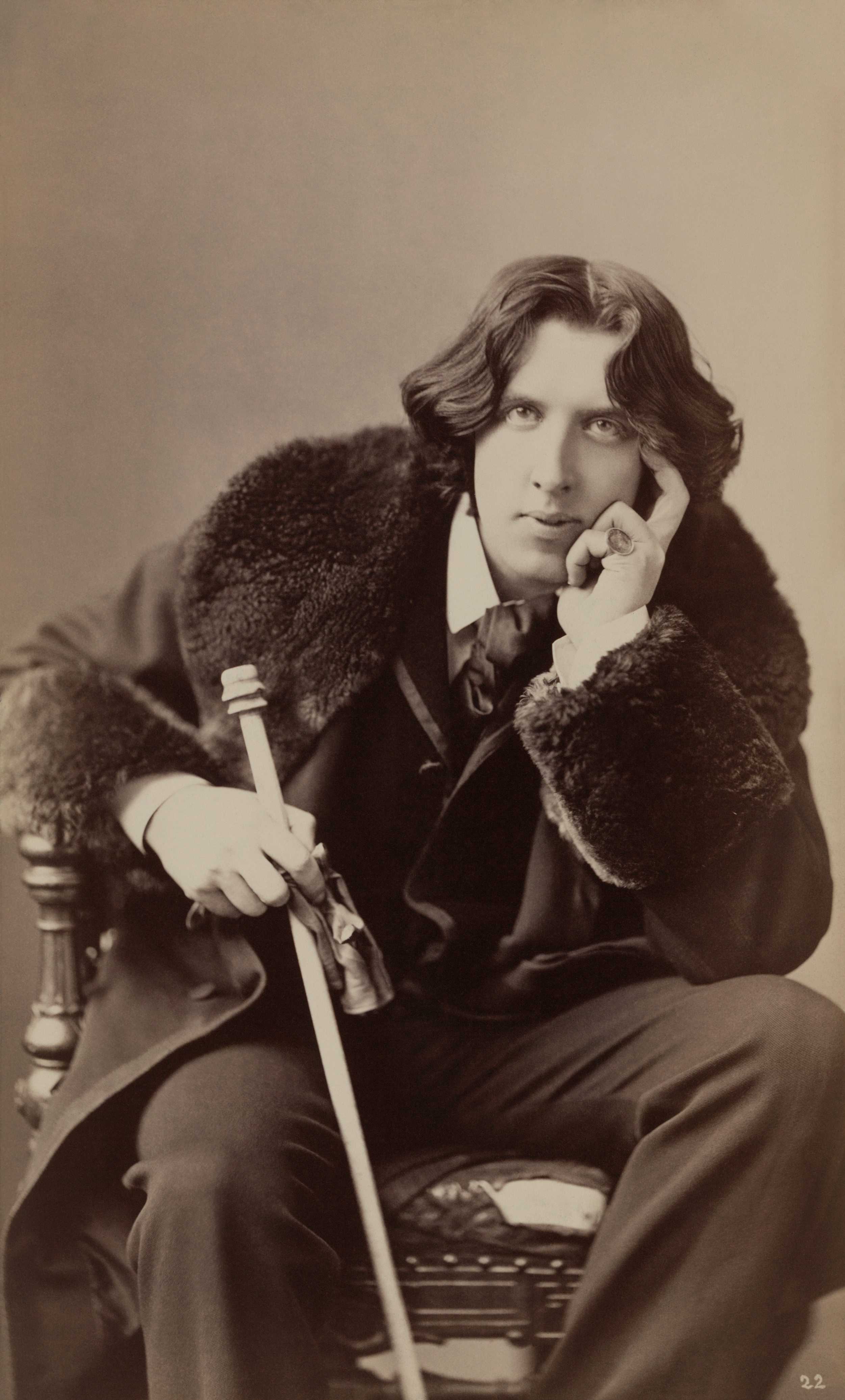
“There is no sin except stupidity” is the provocative Oscar Wilde epigram I chose for my page in my high school yearbook. I’ve always loved Wilde’s way with words, so last year, when writing a murder mystery playscript about an amateur dramatic society, I set it around their rehearsals for Wilde’s comedy play, The Importance of Being Earnest. Cheekily, I named my playscript The Importance of Being Murdered, and later turned it into a novel, which will be published next month.

As I started writing my script, I heard that the National Theatre was reviving Wilde’s play, and I enjoyed the subsequent livestream.
Later, I learned their production would transfer with a new cast to the Noel Coward Theatre, with Stephen Fry as Lady Bracknell.
Next came news of an operatic version to be staged at the 2026 Garsington Festival.
Then last month on opening The Times’ property section I discovered a full-page profile of the “real” home of Algernon Moncrieff, one of the play’s key characters.

Papua New Guinea Syndrome strikes again, I thought.
The Papua New Guinea Syndrome
That’s a phrase my first, late husband taught me, because once, when offered a job in Papua New Guinea, he started spotting references to that remote country wherever he went. Subsequently, he used the term whenever a word or concept new to him became puzzlingly ubiquitous, and it never occurred to me to call this phenomenon anything else.
That’s what I’ll write about for the February issue of the Tetbury Advertiser, I decided this morning, but something told me to google “Papua New Guinea Syndrome” first.
You can imagine my horror on discovering a different, darker meaning: a rare, degenerative and fatal disease caused by eating human brains. Abolished in 1960, this tradition was practised by Papua New Guinea’s Fore tribe, who believed it released the souls of the departed.
The Baader-Meinhof Phenomenon
Further googling reassured me that my late husband wasn’t the only one to have coined an inappropriate phrase for what must be a universal occurrence. In 1994, one Terry Mullen wrote a letter to the St Paul Pilgrim Press in Minnesota, describing the same experience as the Baader-Meinhof Phenomenon. As you may know, Baader-Meinhof was a late-twentieth-century terrorist organization named after its founders in 1970. Presumably news of their activities took a while to reach St Paul, Minnesota – and then seemed to pop up everywhere.
The Frequency Illusion
Thankfully, a Stanford academic eventually came up with a less emotive term: “frequency illusion”. Writing in 2006, Linguistics Professor Arnold Zwicky explained that our selectively attentive brains home in on what interests us, screening out irrelevance. Confirmation bias gives us the impression that our pet word, phrase or topic is cropping up more often than in reality.
What would Oscar Wilde have made of our earlier misappropriation of language? Returning to my opening quote, I’m rather afraid he might have thought it a sin.
This post first appearedin the Tetbury Advertiser’s February 2026 edition.
PS Since I wrote this piece last month, Oscar Wilde has continued to jump out of the woodwork at me – a documentary about him popped up in PBS’s schedule and another article in The Times, this time about an art exhbition inspired by Wilde and called “Lord Arthur Savile’s Crime” after his short story of the same name.
PPS If the title of this post sounds familiar, it’s because I borrowed it from David Byrne and Talking Heads‘ song, ‘Wild, Wild Life’, which appears in his brilliant whimsical film, True Stories – one of my favourite movies of all time.
In Other News
With The Importance of Being Murdered now in production, I had a very enjoyable chat with my editor last week about my plans for my next book, which will be the fourth Cotswold Curiosity Shop mystery. We haven’t yet hit upon the right title, but I’ll share that with you once we have.
In this book, Alice will help Robert refurbish a crumbling manor house that he takes over in the nearby village of Bunbury, the source of much rumour and gossip in their home village of Little Pride. Alice’s friends and neighbours will provide evidence that help her uncover some strange goings-on on the Bunbury estate, including a startling murder at their welcome party. I’m very much looking forward to spending more time with Alice, Robert, Wendy, Danny, Nell, and all their friends and neighbours – and there’ll also be a guest appearance by one of my favourite charactrs from The Importance of Being Murdered!
Otherwise, in between writing, I’m busy teaching and mentoring for Jericho Writers, and on 21st February I’m going to have fun meeting readers and writer friends at my stall at the Bath and North East Somerset (BANES) Festival of Libraries.

What I’m Reading
I’ve been ploughing through several chunky non-fiction books this week, and the only book I did manage to finish reading was a cosy mystery set in Zennor, one of my favourite places in Cornwall. With mermaids and mystery thrown into the mix, I couldn’t resist.
 Mystery at Mermaid Cottage by M Ganendran
This engaging cosy mystery set in a naturally mysterious part of Cornwall, the village of Zennor. The Cornish village of Zennor, at the far tip of Cornwall, is a terrific setting for all kinds of novels, and when I see a book is set in Zennor – which I’ve loved since first visiting as a child – I immediately want to read it. Knowing that the local mermaid legend is an important part of Zennor’s identity was another draw.
I raced through this atmospheric cosy mystery that really brings the village and its legends to life. Added interest came from the characterisation and the sub-plot of a niece rebuilding a relationship with her estranged aunt. Interesting that it’s a very modern mystery, eg computers come into it, but also very much bound up with the village’s history. A gentle comfort read for the cold, dark January nights.

Yeeow! That tale about Papua New Guineau Syndrome is disturbing, to say the least! Who would have thought there could be such a dark meaning associated with that phrase? From now on, I’m going to Google my “original” names and phrases before I write them! Thanks, Debbie!