Posted in Personal life, Travel, Writing

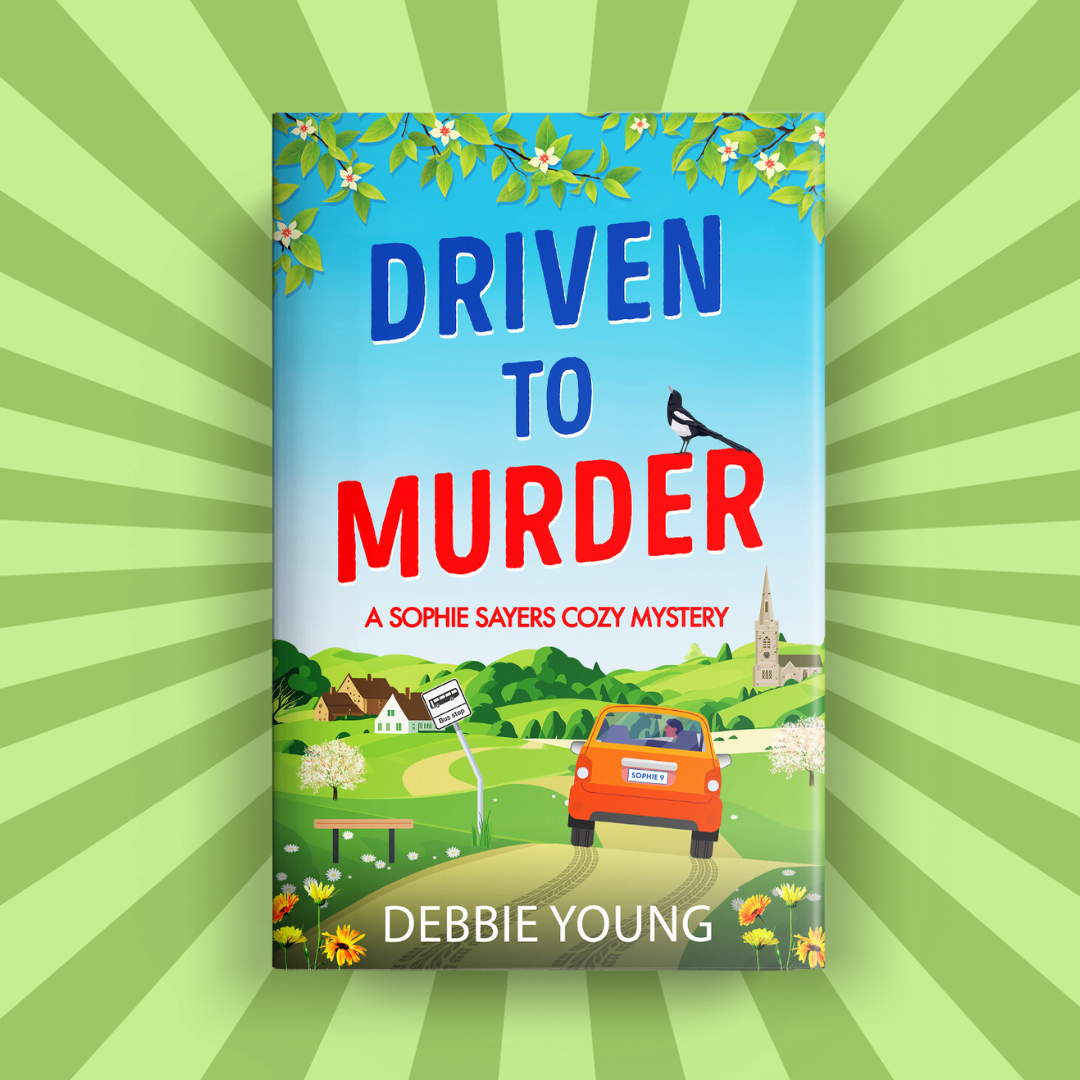
On Life Imitating Art in “Driven to Murder”

This article originally appeared on Boldwood Books’ blog to mark the publication of my latest novel, Driven to Murder.

In a bizarre incident of life imitating art, as a starting point for the ninth Sophie Sayers Cozy Mystery, I struck upon the idea of the village bus service being cancelled – only to discover shortly afterwards that  the bus route passing through my home village of Hawkesbury Upton was also about to be axed.


Although my books are full of comedy, they also subtly gently draw attention to genuine rural issues, such as loneliness and isolation, for added realism.

Public transport is a lifeline to rural communities, especially for the many people who don’t drive or have access to a car. Taxis won’t come out to you as you’re too far from town, and as to take-away services, you might as well be on the Moon!

Only when you lose your public transport do you realise how much you need it.

Children can’t travel to school, teenagers lose their independence, adults can’t get to work, families can’t go shopping or on leisure outings, and no-one can get to medical appointments or banks.

photo of timetable of Hawkesbury bus
Hawkesbury Upton has very few buses – and now these few are under threat. (Sadly, The Fox Inn, one of two village pubs, has now closed its doors forever.)

Losing the bus shrinks your world to your own back yard and cuts you off from vital services that everybody should be able to access – and for which you still have to pay your taxes! *climbs down from soapbox*

photo of London bus in Wimbledon High Street
By contrast, in city streets, there are abundant buses at all hours – often many in a single street at the same time. City-centric politicians don’t realise how poorly rural communities are served by public transport.

In Driven to Murder, when Leif Oakham, suave owner of local bus company Highwayman, plans to axe the bus that connects Wendlebury Barrow with the nearest town, the villagers engineer a lively and creative campaign to save the bus. All goes according to plan until one of their number is murdered mid-campaign, in broad daylight, on the number 27!

Ever the amateur sleuth, Sophie pledges to track down the killer before another tragedy can occur – and to save the village bus service along the way.

There’s just one problem: she doesn’t have a driving licence.

A disastrous first lesson with Hector in his precious Land Rover makes her secretly seek an instructor further afield, with hair-raising results.

horizontal slice of cover of Driven to Murder, showing Sophie careering across the road by a bent bus-stop sign

My husband, who favours action movies, has always told me I ought to add car chases to my books – but I don’t think he meant through single-track country lanes…

Of course, this being Wendlebury Barrow, there’s a happy ending all round, and plenty of surprises along the way.

I just hope we are as successful in winning a reprieve for the Hawkesbury Upton bus.


Back to Reality

passengers boarding the Hawkesbury bus at Yate
In the queue to board the bus from Yate to Hawkesbury Upton last week.

If you’d like to support the campaign to save the Hawkesbury Upton bus, join here’s a link to its Facebook group:

https://www.facebook.com/groups/685419006919379

But the simplest and most effective thing to do is to travel by bus!

Although I’m lucky enough to be able to drive and have my own car, there will come a time when I’m too frail or poor to so. I want to make sure the bus is still there for when I need it. Don’t you?

In the meantime, I’ve pledged to make a weekly journey on our village bus service for the duration of the campaign.

If everyone who lived along its route made just one trip a month, our bus service would be saved.

It doesn’t matter how long or short the journey – each trip will boost passenger numbers, the key to the route’s survival.

Of course, these thoughts don’t apply only to my local bus service – wherever you live, whether urban or rural, the message about public transport is the same: USE IT OR LOSE IT! 


graphic showing book cover and endorsement quotes by bloggers
Now available in ebook, paperback, hardcover and audio – click image to order online or ask for it at your local bookshop
Posted in Personal life, Travel, Writing

Blowing in the Wind

What’s not to love about windmills? From children’s toys to towering turbines, I shared my views in this article for the February issue of the Hawkesbury Parish News.

Summitting a local hill on a clear morning in early January, I am surprised to spot in the distance a wind turbine that seems to have materialised from nowhere. Did a local farmer hang up an extra-large stocking on Christmas Eve, so Santa could leave him one as a present?


These days so many wind turbines seem to spring up overnight that it’s hard to keep track of the new arrivals, especially as they all look the same: soaring white towers topped by three long, narrow blades. Not that I mind, because I find them attractive and soothing to watch.

Only when I plant a child’s toy windmill in my garden do I realise how different its habits are from a wind turbine’s. Although positioned for maximum exposure, a wind turbine’s blades either turn at a steady pace in the same direction, or else they’re stock still. (Apparently too much wind can be dangerous, so in gales they’re turned off for safety reasons.)

Not so my toy windmill. In my relatively sheltered garden, its blue plastic sails whiz round so fast they form a blur. Changing direction every few seconds, they turn just as quickly either way, regardless of the prevailing wind.

As an instrument of meteorological observation, my toy windmill is about as reliable as the rain gauge I’ve sunk into the soil beside it. This calibrated plastic cone often shows negative rain. How can rainfall reduce as the day goes by? Evaporation alone  can’t account for such a discrepancy.

Can rain really fall in reverse?

I solve the mystery when I spot our cat Bertie enjoying a long drink from it. He soon designates the rain gauge his favourite al fresco drinking station. It certainly looks more appetising than his previous preferred outdoor water source, our murky garden pond.

Wondering how wind turbines work leads me down a fascinating rabbit-hole online. I learn how gearing and other technical tricks evolved from early wind-powered machines installed by the Ancient Romans in Egypt. I then spin off at a tangent to investigate the use of traditional Dutch windmills for signalling.

KinderdijkWindmills
Photo of Kinderdijk Windmills, Netherlands (a UNESCO World Heritage site), by Willard84, CC BY 3.0 <https://creativecommons.org/licenses/by/3.0&gt;, via Wikimedia Commons

Historically in the Netherlands windmill sails were locked into particular positions to convey messages to the local community. + meant the mill was open for business, x that it was closed. The top sail at 1 o’clock denoted a healthy birth, whereas 11 o’clock indicated a death. During World War II, sail settings issued silent warnings to the local population, such as of the arrival of Nazi search parties seeking Jews.

Korenmolen "De Valk" in rouwstand naar aanleiding van bijzetting te Delft van Koningin Wilhelmina - Leiden - 20137630 - RCE
Photo of Dutch windmill with sails in mourning position for Queen Wilhelmina, 1962 Rijksdienst voor het Cultureel Erfgoed, CC BY-SA 4.0 <https://creativecommons.org/licenses/by-sa/4.0&gt;, via Wikimedia Commons 

The tradition continues: in July 2014, when 198 Dutch passengers were killed in the attack on Malaysian Airlines Flight MH17, windmills across the Netherlands set their sails in the mourning position to show respect for those who lost their lives.

The only problem with my new-found knowledge is that next time I see an immobile wind turbine, I’ll wonder what it’s trying to tell me.


When Windmills Can Mean Murder…

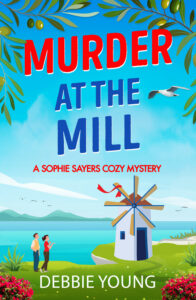
cover of Murder at the Mill set against olive leaves
Join Sophie Sayers for a trip to a sunny Greek island in spring

If you also love windmills, you might like to try my sixth Sophie Sayers cosy mystery, Murder at the Mill (originally published as Murder Your Darlings).

In this story, aspiring writer Sophie Sayers travels in the spring to a tiny Greek island to join a writers’ retreat. It’s to be led by bestselling romantic novelist Marina Milanese – but then she goes missing on a solitary stroll to a derelict clifftop windmill. First on the scene of Marina’s disappearance, Sophie soon finds herself accused of murder, and must work fast to solve the mystery before the local police can arrive from the mainland.

This lighthearted, feel-good mystery introduces a lively group of eccentric authors, plus colourful Greek characters from the holiday hotel. Not to mention the elusive monks in the local monastery…

It’ll also make you feel as if you’ve had a Greek island retreat of your own!

Murder at the Mill is available to order in ebook, paperback, audio and large print, from wherever you prefer to buy your books.

Or order Murder at the Mill online here. 

Posted in Personal life, Travel

Mistaken Identity

My last blog post for 2023 is the column I wrote for the December 2023/January 2024 double issue of the Tetbury Advertiser, written in the run-up to Christmas. 

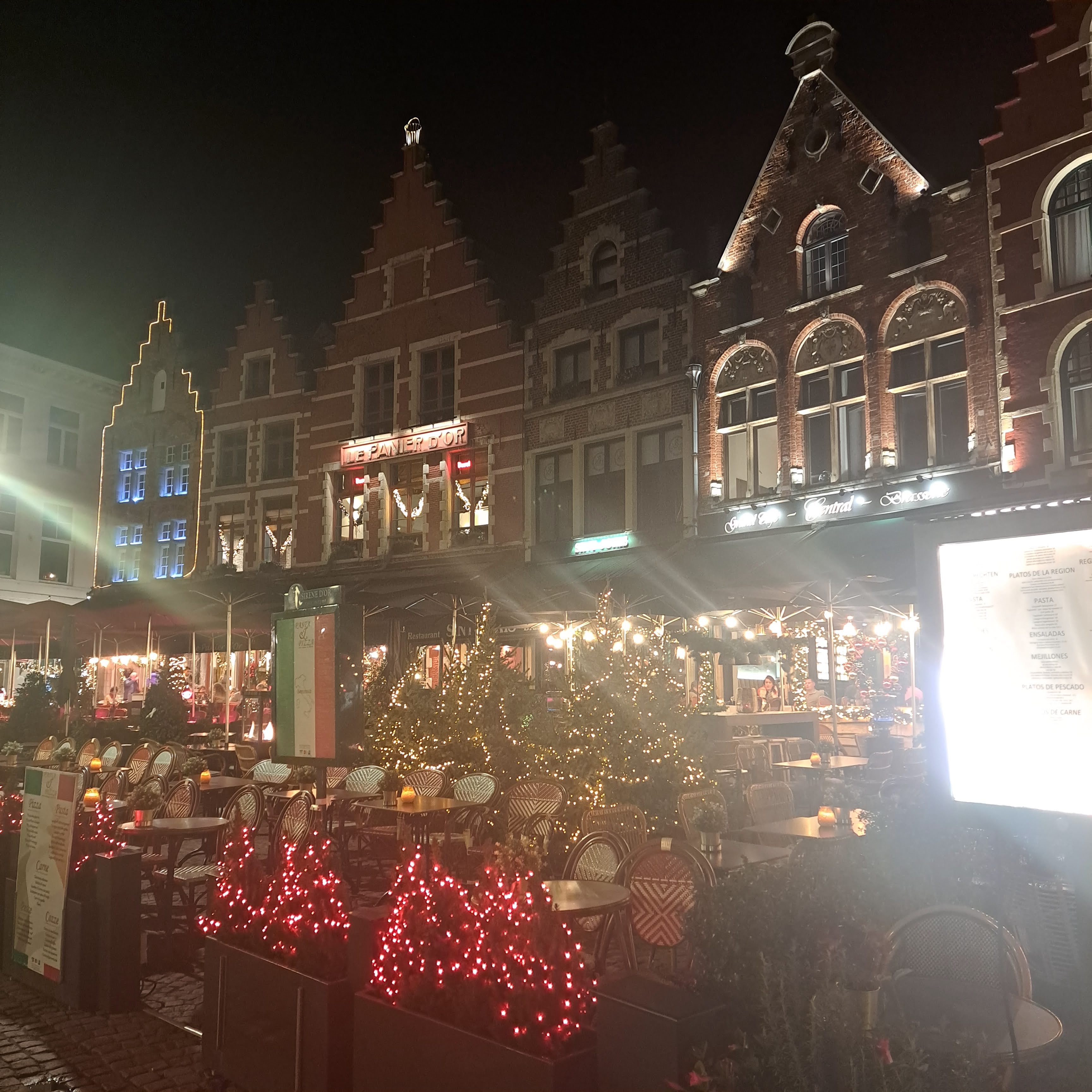
On my first trip abroad for over a year – only my second since before Covid – I find it refreshing to hear other languages spoken. My short break in the historic city of Bruges exposes me to far more than Belgium’s three official languages, French, Dutch, and German. The cheerful hotel receptionist who greets us in fluent English converses just as easily in Spanish with other guests. As we roam the cobbled streets, we catch drifts of Asian languages from tour guides leading walking groups.

Continue reading “Mistaken Identity”

Posted in Travel, Writing

What’s in a Name?

Have you ever wanted to visit a place simply because its name intrigued you?

On a short break in North Devon, I am pleased to have the opportunity to visit Westward Ho! The exclamation mark that is part of the seaside town’s official name makes it sound so thrilling. The only thing I know about Westward Ho! is that Charles Kingsley wrote a novel by that name, so I assume he thought it worth celebrating. 

Yet as I plan our trip, I discover the novel Westward Ho! predates the town. Kingsley wrote it in 1855 while living in Bideford. (See header photo for Bideford’s statue in his honour.) Only in 1863 did an enterprising firm of developers start building an eponymous town nearby to cash in on the novel’s popularity.


copy of Tove Jansson's Moominsummer Madness and a cuddly toy Moominmamma
We love the Moomins…

In most countries, there’s no copyright on book titles, so I wonder this doesn’t happen more often. It’s a much more exciting approach to merchandising than the usual t-shirts, tea-towels and tote bags. My daughter and I would visit a real-life Moomin Valley like a shot.

So, if Kingsley’s book didn’t take its name from the town, where did it originate?

Received wisdom is that it came from Victorian water-taxi signs indicating their direction of travel along the Thames. There was also a play by the same name, written by John Webster and Thomas Dekker in 1604, about the westward expansion of London. There followed plays called Eastward Ho! and Northward Ho!  but no Southward Ho! Maybe Jacobean playwrights, like London cabbies, didn’t like going south of the river.

I wonder whether Westward Ho! is the only place name in the world to include an exclamation mark, and I’m pleased to discover another town with not one but two.

I think St-Louis-du-Ha!-Ha! in Quebec, Canada, sounds like a fun place until I find it’s named after the French word haha, meaning an impasse, rather than for a civic sense of humour. It’s the same word we use in English to mean a concealed trench to prevent animals passing from farmland to gardens, dispensing with the need for a fence or wall that might spoil the landowner’s view.

Sign for Canada Post office at St-Louis-du-Ha! Ha! in Quebec (3037740822)

The nearest haha I know to Tetbury is at Westonbirt School, at the edge of its Grade I listed gardens. (See Historic England’s offical mention of Westonbirt’s haha here.)  A vintage list of school rules forbids pupils from roaming beyond the haha. This instruction must have perplexed new girls, unless they all had hahas at home.

Meanwhile, back in Bideford, I discover on YouTube a satirical song called “Westward Ho! – Massive Letdown” by Half Man Half Biscuit.


With a discography that includes “Trouble Over Bridgwater”, “Back in the DHSS”, “Dickie Davies Eyes”, and “Voyage to the Bottom of the Road”, there’s a band that knows how to work a name.

Consequently, when I finally arrive at Westward Ho!, I’m bracing myself for a let-down, but thick fog drifts in from the sea shrouding the whole place, making it impossible to form a fair judgment. My sense of wonder therefore remains intact. Not so my computer’s grammar checker, sent into meltdown by all those rule-breaking exclamation marks.

(This post first appeared in the October 2023 edition of the Tetbury Advertiser).


IN OTHER NEWS

cover of Christmas with Sophie Sayers
Launching Friday 24th November

The manuscript of my next novel, Driven to Murder, (Sophie Sayers #9) with the proofreader, and due to be published on 26th January 2024 (ebook available to pre-order here with a placeholder title – cover reveal to follow soon).

I now have a little leeway to work on another project that I’ve been planning for literally years – a new collection of festive short stories featuring Sophie Sayers and her friends from my Sophie Sayers Village Mysteries.

One of the stories also features staff and pupils at St Bride’s School, when Gemma Lamb accompanies a party of school carol singers to Wendlebury Barrow.

The collection also includes my first (and so far only) story about Sophie’s late Great Auntie May, in Christmas Ginger.

Some of the stories have been shared online before, and Christmas Ginger was included in the Everyday Kindness anthology, edited by L J Ross to raise funds for housing charity Shelter. But this is the first time the stories have been brought together in a book.

This collection of gentle, feel-good stories of Cotswold village life (with not a murder in sight!) would make a great stocking filler or Secret Santa present, or indeed a gift-to-self to help you get in festive mood.

Christmas with Sophie Sayers will be published worldwide on all the major retail platforms un paperback and ebook on Friday 24th November. The ebook is already available to pre-order on Amazon here. I’ll share buying links for other digital channels including Apple, Kobo and Nook as soon as they’ve been confirmed.