In my last post of each month I’m in conversation with an author friend, each time on a different topic that I think will interest my readers. This month my guest is the prolific and versatile Jean Gill, who writes across an extraordinary range of genres, with considerable skill in each one. Whatever kind of books you prefer to read, Jean’s catalogue is bound to contain something that will appeal to you.
Helen Hollick is one of my longest-standing author friends. When we met at an event organised by SilverWood Books back in 2012 (see photo above), we immediately hit it off, and have been in regular contact ever since, despite living a couple of counties apart – Helen in her idyllic farmhouse in Devon, me in a village in the Cotswolds. She’s also been a frequent guest on my blog. (See links to some of her previous posts for me at the foot of this one.)
Helen is a long-established, prolific and versatile author, starting out as a historical novelist, sidestepping into historical pirate-themed fantasy, history books, and most recently cosy mysteries. Her Jan Christopher Mystery series is set between 1970s Essex and Devon and features a young librarian and her police officer fiancé. It’s a gentle, feel-good read, and for those of us old enough to remember the 1970s, it’s enjoyable nostalgic too.
The first four books in Helen Hollick’s cozy mystery series
Introducing the fifth Jan Christopher Mystery
The fifth in Helen’s series will launch on 18th May
This month Helen will launch the fifth in her series, A Memory of Murder, featuring “a missing girl, annoying decorators, circus performers, and a wanna-be rock star” – and harking back to the murder of Jan’s police officer father fifteen years earlier…
In the run-up to the publication of A Memory of Murder, Helen is running a special mystery week on her blog, with a new post every day by a different crime writer.
I was honoured to be the first on her agenda, and I’m sharing the opening of my guest post for her below. Click the link at the bottom to read the rest of the post on her blog.
CONFESSIONS OF A RELUCTANT MURDERER
(My guest post for Helen Hollick’s Mystery Week on her blog)
To murder or not to murder, that is the question…
‘I don’t really like murdering people,’ I once said in a public place when chatting to writer friends, startling innocent bystanders unaware of our occupation.
Of course, I was speaking about murdering fictitious characters in my books. In real life I find it hard to kill as much as a fly. This may surprise you when you hear I’m an author of murder mystery novels.
This year, my last blog post of every month will be a conversation with one of my author friends, talking about an aspect of their writing life that I hope will interest my readers too.
Meet my friend Alison Morton!
This month, thriller writer Alison Morton is my guest. Alison and I have had parallel careers as novelists, with us each writing two series, all falling under the broad heading of crime fiction. But whereas mine is lighthearted cozy mystery set in the comfy Cotswolds, Alison’s is serious stuff, pan-European thrillers, one series of modern stories, and the other alternative history.
I’m always interested in what Alison’s up to, but the reason I’ve invited her onto my blog today is that she is celebrating the launch of her eleventh Roma Nova book: Exsilium.
But where’s Roma Nova? I hear you cry!
Alison, if Roma Nova were a real country, how would its Wikipedia entry read?
Alison:
Roma Nova (ˈrɒmə ˈnəʊvə), officially Colonia Apuliensis Roma Nova is a landlocked Latin-speaking country located in the Eastern European Alps. It borders New Austria and Italy. Roma Nova is a semi-constitutional monarchy headed by an imperatrix who rules in association with an appointed Senate and an elected People’s Assembly.
With an area of 2,950 square kilometers (1140 sq mi), it supports a population of 1.5 million (2019). Economically, Roma Nova has one of the highest gross domestic products per capita in the world based on mining and processing minerals, especially silver, powerful technology and engineering sectors, financial services and specialist agricultural exploitation. It maintains military national service and a unique matrilineal social structure. It belongs to the European Economic Area and the United Nations and often acts as an intermediary between nations.
Alison enjoying a visit to Virunum, the real-life location for her fictitious Roma Nova
Alison:You might also like to read this tourist guide to Roman Nova, written by a certain Claudia Dixit, which I’ve shard on my blog here:
Debbie: That’s great fun, thank you! Now, speaking as someone who has written two series of novels in chronological order – the first seven Sophie Sayers books run the course of a village year from one summer to the next, and the Gemma Lamb series, when complete, will cover an academic year, with two books per term – I am intrigued by the more complex order in which you wrote your books. Please enlighten us!
Alison: this chart gives a clear picture of when each book was published, when it was set, and where it falls in the chronological order of the series.
Title and date published
Time story set
Chronological order
INCEPTIO – March, 2013
Approx 2010
7
PERFIDITAS – October 2013
2016
9
SUCCESSIO – May 2014
2023/4
10
AURELIA – May 2015
1968/9
3
INSURRECTIO – April 2016
1984/5
5
RETALIO – April 2017
1986/7
6
CARINA (novella) – November 2017
2013
8
ROMA NOVA EXTRA (stories) – October 2018
AD370-2029
Mixed
NEXUS (novella) – September 2019
Mid 1970s
4
JULIA PRIMA – August 2022
AD 370
1
EXSILIUM – February 2024
AD 383-395
2
And here are the covers in all their glory!
The complete works of Alison Morton, across both her series of thrillers
Debbie:How did you come to write the Roma Nova novels in this order? Was it a process that evolved or did you plan it this way from the start?
Alison: Totally chaotic and unplanned! In late 2009, I set out to write a book to express ideas I’d had bubbling in my head for decades – Romans, woman hero, military, thrilling story with a dollop of romance. That was Inceptio. Before it was even polished up and when I was ignorant of the publishing and book world, I had written the manuscript of Perfiditas. The characters were starting to push me to write the ‘what happened next?’’ story so I wrote Successio, which brought in the next generation. I thought that was it. Trilogy done.
Then Aurelia, the elder stateswoman mentor of Carina, the heroine of my trilogy, started nagging me, so I had to write her story, Aurelia. But what had she done in the Great Rebellion the other characters kept going on about? What were the secrets of her younger self? So I went back to 1968 and the series time anomaly opened…
I ended up writing about the Great Rebellion in Insurrectio and the resolution in Retalio. Right, that was it! No more.
Then every one of my writer friends started writing novellas.
Debbie:Guilty! I confess!
Alison: I had a nagging feeling there were gaps in my trilogies when we knew nothing of the lives the Roma Novans were living between the books. Why didn’t I have a go at some short fiction for a change?
Carinain 2017 filled in a gap between Inceptio and Perfiditas and highlighted the conflict of duty, love and loyalty and Nexusin 2018 filled the fourteen-year gap between Aurelia and Insurrectio and set up a few things for Retalio. Both were short at 38,000 words.
In between, I put together eight short stories that really blasted the time continuum apart, varying between AD370 to 2029 in the future!
Why did I go back into the deep past of the late fourth century with Julia Prima and now Exsilium? Because the fans kept on asking me. And it was fun to write straight historical fiction.
Debbie: With the publication of Exsilium, do you now recommend readers new to your series start with that book, or is it better to read them in the order you wrote them? I know they all work as standalone novels too.
Alison:It doesn’t really matter. I’ve woven in references between all the books, so those reading from start to finish of the will enjoy little ‘Easter eggs’ (and possibly go, ‘Aha!’) when they see the connections. Perhaps the four Carina books set in the present – Inceptio, Carina, Perfiditas, and Successio – could be read in succession as could the 1960s/80s group of Aurelia, Nexus, Insurrectio, and Retalio. Historical fiction fans might like to start with Julia Primaand Exsilium.
Debbie:With my novels, I’ve had my sights set on the very specific genre of cozy mystery all along, although there are strong romantic and comic elements too. By contrast, the Roma Nova novels bend and blend genres. Some are purely historical novels, and others are alternative history (or alternate history, as our American friends term it) – although of course all ‘althist’ must at least be founded on historical fact. What are the challenges of mixing up the genres within a single series?
Alison: This goes back to what we discussed earlier – chaos! I had no idea that the standard approach was writing in a set genre. I just wanted to write my story.
It dawned on me later that that the book world, especially marketing and selling, ran on strict structural lines. So it’s been a very difficult marketing road.
But once people read one in the series, they very often go on to buy all the others and I’ve had some very heart-warming emails and letters from readers expressing their love for Roma Nova.
That I’ve touched people, and sometimes inspired them, works for me.
Debbie: Sometimes, to both readers and writers, it can feel as if a series has gone on too long. The best writing advice I’ve heard on that score is from our mutual friend, Orna Ross, who told me, “One must be careful not to keep writing the same book over again”, and every time I plot a new addition to my series, I bear that advice in mind. You’ve obviously found a very good way of keeping each novel fresh by changing the timeframe. What other advice would you offer to aspiring authors planning to write series?
Alison: I say this with no irony – plan! I don’t mean a hard and fast structure for your series, but work out a setting/book world that can absorb a lot of different stories.
The second thing is not to write one book, then go slightly more outrageous in the next one, and by Book 10, you’re over the limits of probability and into space cowboys.
Thirdly, interlink the books in some way apart from ‘what happened next’.
Lastly, NEVER finish one book in a series with a cliff-hanger.
Debbie: The Roma Nova novels span many centuries, taking us up to the present day. Would you ever consider writing a speculative futuristic take on Roma Nova? Any thoughts on how that might pan out?
Alison:I wandered a few years into the future in ‘Allegra – An Unusual Love Story’, one of the short stories in the Roma Nova Extra collection and quite enjoyed that, so something to think about. In the future, of course.
Debbie:Anchored firmly in the present is your contemporary Mélisende pan-European thriller series, which currently stands at two books, Double Identityand Double Pursuit. Are you tempted to write a prequel for Mélisende that would take us back in time in that series too?
Ah! I have. ‘The Sand Beneath Her Feet’ is a short story exclusively available as part of a thank-you ebook for signing up to my newsletter. It tells of Mel’s last mission before leaving the French Army. Like many a thriller, it all blows up in her face.
Debbie: It seems every time I publish the latest in one of my series, readers ask when the next is due out, but at the request of my publisher Boldwood Books, my current work-in-progress is a new trilogy. It’s still cozy mystery set in the Cotswolds, but all-new in every other respect, but there will be more stories about Sophie and Gemma too. So, now that EXSILIUM is out in the world, what’s next for you? More in either of your series, or do you have any plans to branch out? If your readers will let you, that is!
Alison: I’ve started the first chapter of the Mélisende ‘Doubles’ series and I’m longing to see what she’s going to make of it. However, I have a feeling my Roma Nova readers won’t let it go that easily…
Debbie: Where can readers find out more about you and your books?
Alison: The best starting point is my World of Thrillers site: https://alison-morton.com, where you’ll also find links to my social media accounts and my writing blog, as well as more information about my new book, Exsilium.
Now available in ebook and paperback – click image to choose your preferred retailer
This week I’m in conversation with my author friend Helen Hollick about why rural communities make such great settings for cosy mystery novels
Taken when I first met Helen Hollick at the launch of my first book many years ago! We have since become firm friends.
When my historical novelist friend Helen Hollick took to writing cosy mystery stories during lockdown, I couldn’t wait to read them. I’d enjoyed her Jesemiah Acorne pirate series, and her Arthurian novels were among my mum’s favourite books. What’s more Jan Christopher, the heroine of her new mystery novels was a young librarian in a public library very much like the one I belonged to as a child.
Like me, as an adult Helen moved from greater London suburbia to the countryside – in her case to Devon, rather than to my neck of the woods in the Cotswolds. Her latest Jan Treasure mystery embraces Devon life at harvest time. I’m pleased to invite Helen on to my blog to day to tell me a bit about why rural Devon – or indeed any rural community – makes such a great setting for cosy mystery stories.
Click the image to view the book on Amazon
Helen: Hello Debbie, thank you for hosting me – and Jan Christopher – today!
Debbie: Jan’s adventures alternate between her native suburban London Borough of Waltham Forest and rural Devon. Why does a rural community make such a great setting for a cosy crime story?
Helen: I moved from London with my husband and daughter, (and the horses and the cats and a dog) to Devon in January 2013 – best thing we ever did!
During Covid lockdown I wanted to write something where I could use my experience of working as a London suburb library assistant during the 1970s. A cozy mystery seemed a good idea, so the Jan Christopher Mysteries came into being. Snag. I also wanted to write about Devon; not exactly autobiographical, but drawing on living in the countryside. Easy solution: alternate the locations.
I think a rural community setting appeals to readers of cozy crime because of the lure of a slower pace of life, and the huge advantage of a village community is that everyone knows each other – ideal for amateur sleuthing via murder mystery writers!
And then there were four…
Village gossip is no mythical exaggeration. Often X who lives at the other end of the village will know what you’re going to do before you do yourself. It’s a sad fact, but I only knew my immediate next-door neighbour when I was back in London, no idea of anyone else in the street. Here, I know almost everyone in the village, even though my nearest neighbour lives almost ¼ of a mile away!
And the biggest appeal of all? Many people long to live in the countryside, away from the hustle and bustle, but have no opportunity to do so. To escape into an outdoor life via the pages of a book is the next best thing to actually doing it – and with the added bonus of working out ‘whodunit’, well, who can resist?
Work in progress
Debbie:What does the rural setting offer that the urban one doesn’t? – and vice versa?
Helen: North Devon couldn’t be more different to Waltham Forest – a sprawling north-east London Borough consisting of the towns of Chingford, Walthamstow, Leyton and Leytonstone. It’s one advantage: Chingford borders the County of Essex and can boast the inclusion of Epping Forest, where I used to ride and keep my horses.
When musing about writing a murder mystery, I knew that I did not want to write it as a police procedure series. I know very little about crime investigation, beyond what I watch on TV, and anyway, my mysteries were to be set in the 1970s when we didn’t even have mobile phones, let alone the internet!
Here in a rural community we rarely see a police car, but they are everywhere in a London town.
In the countryside, strangers are all too happy to chat to other strangers. Alas, it doesn’t happen in London, everyone is far too busy rushing about from A-B with ‘no time to stand and stare’. Country people can often be found leaning on a gate, thoroughly enjoying the view.
Timekeeping rarely seems to exist. There’s a Devon word ‘Dreckly’, it basically means ‘some time soon’. Soon could be this afternoon or next month… or the next.
So in a rural setting you have fewer locals to include as characters but a greater opportunity for the community to gossip.
One huge advantage for a murder mystery, in a small rural village is that it will take a while for a summoned policeman to arrive. In town, you’re probably talking within the hour – add a couple more hours for Devon. Which gives your criminals time to get away, and time for some quality amateur sleuthing.
Nearly done!
A village will probably only have one or two shops and pubs. Town will have several in a small area. Fewer cars in villages, so the ‘grockles’ (strangers/tourists) are more readily noticed.
Good tip for mystery writers: visitors’ cars are usually clean.
The locals get used to the muddy lanes and soon don’t bother cleaning their cars!) A murder committed in town will usually get immediate attention. In a village – well someone in authority will come along ’dreckly…
Debbie: Like Jan – and Sophie Sayers and me! – you’ve moved in real life from an urban to a rural setting. But your move to the countryside, like mine and Sophie’s, was permanent. Jan clearly appreciates the beautiful, peaceful scenery – we know this as the stories are written mostly in her voice. Do you think it might tempt her to move permanently to Devon, if Laurie can get a work transfer?
Helen: Oh that would be telling wouldn’t it? Although in the postscript of Episode One, A Mirror Murder, (with the p.s set in modern times,) a much older Jan is clearly not in London. Does she move permanently? When? How? And is she still with DS Laurie Walker? Ah…all that will be in another story!
Debbie: How do your real-life neighbours take to having a crime-writer living in the midst of their peaceful community? Have you ever been asked to solve any local crimes or misdemeanours?
Helen: No, to the second part of the question, thank goodness, although I’ve often had to search my fields for a missing horseshoe that one of the horses has lost. Or one of the dog’s toys – or, actually, even a missing pony! We have a couple of Exmoor ponies and they are frequent escape artists. We found them once, over half-a-mile away almost up at the village. I’m sure they were heading for the pub!
My real-life neighbours are wonderful. I must add that my quirky characters are all entirely fictional, apart from three people: Heather is my friend who is often involved with the village community shop. We have tea and cake together usually once a week and often discuss the next mystery. So of course she had to become the Devon shopkeeper in my stories. In A Meadow Murder I have also included pub landlords Hazel and Steve, primarily as a thank you for their wonderful hospitality at the Exeter Inn. Hazel, Steve and Heather gave their full permission to be used as characters, and I have assured them that they would always be ‘goodies’ and not victims!
I have heard that there’s often a fair bit of chatter in the village shop about my books … mostly good, I hope!
Jan takes a ride on top of a loaded tractor in “A Meadow Murder”
Debbie: My fellow bell-ringers at our parish church are always suggesting new murder ideas for me – 101 ways to kill someone with a church bell! Does your adopted home in Devon inspire you with new ideas for crime stories that are specific to rural Devon or to the countryside in general?
Helen:Oh yes! Read A Meadow Murder and find out! I came up with the plot last summer whilst watching our local farmer, Andrew, trundle up and town turning the cut hay in our top field. The field slopes so you can’t see the bottom at all. “What if…” I thought.
The cover image for Meadow Murder is actually my field. The deer and rabbits have been added, but we do see them there.
Debbie: Jan’s stories are set in the 1970s. Her home town in north-east London will have changed a lot – to what extent have things changed since then in rural Devon? How different would the stories be if Jan was a member of Generation Z, ie born between 1990 and the early 2000s?
Helen:A modern Jan would be very different –which is why the stories are set in the 1970s, ‘my’ years as it were. (I was born in 1953.) Technology is a big difference, nearly everyone has cars, phones, laptops today. Though not everyone has a good Internet connection – ours can be very sporadic. We get quite a few power cuts too. I really enjoy your Sophie Sayers mysteries, Debbie, but, well, I just couldn’t do it. Jan and Laurie and their families are from the ’70s and that’s that! The thought of writing modern day just doesn’t appeal to me at all. I guess nostalgia wins out for me – and I hope for my readers, too!
Debbie: Finally, thank you for allowing me to share below an extract from A Meadow Murder to whet my readers’ appetites!
Extract from A MEADOW MURDER
The tractor was trundling off down the row, the baler scooping up the cut hay, packing it into slabs, automatically tying them together with two lengths of baler string and shooting the trussed rectangular bale out behind, before repeating the whole process. Mr Greenslade drove the tractor round the field in ever decreasing circles – or more correctly, odd-shaped squares. Down one row, along the bottom of the meadow, up the furthest row, across the top of the meadow, down the next row, along the bottom… coming at each turn closer to the middle of the field until there were only two rows left.
Our job, I discovered, was to follow the tractor and stack the bound bales in groups of six or eight in order to make the next step of loading them onto the trailer easier.
“Roll them,” Kevin advised when he saw me lifting a bale by the string. “Less likely for the twine t’ break an’ easier on your back. Roll with the lie of the land, downhill.”
It took a while to cover the entire field, walking up and down the rows – down was fine, up… the hill seemed to get steeper with each row. Funny how it didn’t look steep from the top, but imitated Mount Everest from the bottom. (Slight exaggeration, but you know what I mean!) At last the tractor came to a stop, with (and we all cheered) no more breakdowns. Scattered across the field as if they were some form of crude artistic sculptures, were stacks of hay, baking in the heat of the haze-shimmering, airless afternoon. We were all somewhat sweaty and grimy, with sore backs and smarting hands, despite wearing gloves. But the work was only half done. Five-hundred bales of hay had to be transferred into the security of the barn before those blackening clouds came any nearer.
If I thought anything we’d done so far was backbreaking, hard work, I soon discovered that I’d been wrong. Stacking the bales on the trailer was much harder, even though I had one of the easier assignments. Aunt Madge and I were on the flat bed of the trailer receiving the bales that the men tossed up. We had to stack them one layer at a time, with each layer criss-crossing, otherwise, if they’d been simply one atop the other the whole lot would fall down. The first three layers were quite simple, but as the stack got higher, the bales had to be tossed higher, and we had to climb higher to keep up with the enthusiastic (and apparently untiring) bale-tossing men. I say it was hard work (it was!) but it was also a laugh. Teasing and banter between us, laughing as the tractor pulling the trailer lurched across the field from each six or eight stacked pile of haybales to the next. I had never felt as stiff and tired before, nor had I ever felt as wonderfully alive and happy.
Aunt Madge jumped down as the fourth layer began to grow, aware that she wasn’t too confident at balancing on a lurching and swaying height, which left me to do the last two layers on my own, but I’d got into the swing of it by then, so didn’t mind.
I suppose the trailer took about seventy bales. (I can’t tell you exactly; I’m guessing as I lost count somewhere along the third layer.) Then the next fun bit… there was no way I could get safely down – balancing atop a trailer stacked high with bales of hay is a challenge, believe me. Outside of learning how to fly, or leaping into Laurie’s outstretched arms in the hope that he’d catch me (both not an option), there was only one thing for it. I made myself a hollow in the centre of the top layer to ride the trailer all the way down the lane.
“Duck your head under the low trees!” Laurie called as Mr Greenslade set off negotiating the gate and the fairly tight turn from the meadow into the lane.
I have to say, it was one of the most thrilling things I’d ever done – and this included those scary, whizzy rides at the fun fair! The trailer was slow, very bumpy and rattly, and I could hear the occasional grinding of complaining brakes holding back the tremendous weight as we went down the steep hill, but the view above the hedges to across the fields was magnificent, and the ride itself was, well I can only describe it as exciting.
About A Meadow Murder
Make hay while the sun shines?
Summer 1972. Young library assistant Jan Christopher and her fiancé, DS Lawrence Walker, are on holiday in North Devon. There are country walks and a day at the races to enjoy, along with Sunday lunch at the village pub, and the hay to help bring in for the neighbouring farmer.
But when a body is found the holiday plans are to change into an investigation of murder, hampered by a resting actor, a woman convinced she’s met a leprechaun and a scarecrow on walkabout…
A Meadow Murder is the fourth tale in the Jan Christopher cosy murder mystery series, the first three being A Mirror Murder, A Mystery of Murder and A Mistake of Murder… see what I’ve done there? Yes, I’ve created a proper puzzle for myself because now every tale in the series will have to follow the same title pattern of ‘A M-something- ofMurder’ (Suggestions welcome!)
Based on working as a library assistant during the 1970s, the mysteries alternate between the location of Chingford, north-east London, where the real library I worked in used to be, (the building is still there, but is, alas, now offices,) and my own North Devon village, but ‘Chappletawton’ is a fictional version, larger than my rural community and has far more quirky characters.
The main characters in the series, however, remain the same: Jan Christopher is the niece, and ward, of Detective Chief Inspector Toby Christopher and his wife, her Aunt Madge. In A Mirror Murder, Jan (short for January, a name she hates) meets her uncle’s new driver, Detective Constable Lawrence Walker. Naturally, it is love at first sight… but will an investigation into a murder affect their budding romance?
“As delicious as a Devon Cream Tea!” author Elizabeth St John
“Every sentence pulls you back into the early 1970s… The Darling Buds of May, only not Kent, but Devon. The countryside itself is a character and Hollick imbues it with plenty of emotion”author Alison Morton
About Helen Hollick
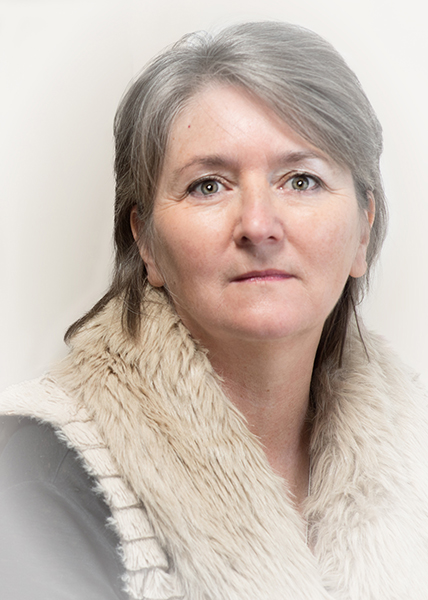
Helen Hollick
First accepted for traditional publication in 1993, Helen became a USA Today Bestseller with her historical novel, The Forever Queen (titled A Hollow Crown in the UK) with the sequel, Harold the King (US: I Am The Chosen King) being novels that explore the events that led to the Battle of Hastings in 1066. Her Pendragon’s Banner Trilogy is a fifth-century version of the Arthurian legend.
She writes a nautical adventure/supernatural series, The Sea Witch Voyages. She has also branched out into the quick read novella, ‘Cosy Mystery’ genre with her Jan Christopher Murder Mysteries, set in the 1970s, with the first in the series, A Mirror Murder incorporating her, often hilarious, memories of working as a library assistant.
Her non-fiction books are Pirates: Truth and Tales and Life of A Smuggler.
Helen lives with her husband and daughter in an eighteenth-century farmhouse in North Devon.


 Helen: Hello Debbie, thank you for hosting me – and Jan Christopher – today!


 Extract from A MEADOW MURDER
 About A Meadow Murder