

In my column for the April issue of the Hawkesbury Parish News, I was musing about changing the clocks for British Summer Time and comparing it to losing whole days when the world switched from the Julian calendar to the Gregorian calendar – which, astonishingly, happened in different years in various countries around the world

If you begrudged losing an hour at the end of March, think yourself lucky. If you’d been alive in 1752, you’d have lost eleven days.
That’s when it became clear that the Julian calendar we’d been using since the days of Julius Caesar was an inaccurate measure of a solar year, ie how long it takes the earth to go round the sun. The only way to realign the calendar with astronomical events such as the spring equinox was to skip forward a number of days. The Gregorian calendar, introduced by Pope Gregory XIII in 1582, provided a new system that we still use today.
How many days you sprang forward depended on how quickly your country switched to the new system.
Early adopters France, Italy, Poland, Portugal and Spain sacrificed 10 days of 1582, whereas countries leaving it until the twentieth century, such as Russia, Greece and Turkey, lost 13.
When England took the plunge in 1752, we missed 11 days, the government decreeing that Wednesday 2nd September would be followed by Thursday 14th September. You can’t help but feel sorry for the people born between 3rd and 13th, missing out on their birthdays that year.
The 11 abolished days also account for why the British tax year starts on 6 April. Historically, rents and debts fell due on the four quarter days of the Christian calendar:
- Lady Day (25 March)
- Midsummer Day (June 24)
- Michaelmas (29 September)
- Christmas Day (25 December)
Lady Day had always been the start of the tax year. When the government realised that switching to the Gregorian calendar would cost them 11 days of tax revenue, they simply extended the tax year, making it end on 5 April.

Sweden intended a more gradual approach to switching calendars, planning to simply cancel leap year days from 1700 to 1740. After errors prevented that happening in 1704 and 1708, they postponed their plan, designating 1712 a double leap year to restore the Julian calendar. This move created a one-off opportunity to be born or married on 30 February, thus never being able to celebrate your birthday or your wedding anniversary on the right day again. (They eventually went Gregorian in 1753.)
So while we may feel that we’ve missed out on many things during the last year due to Covid-19 restrictions, at least we still had the right number of days, even if it was often hard to tell them apart.
(With apologies to The Kinks and Kirsty McColl for the title,
inspired by their wonderful song).
IN OTHER NEWS
COUNTDOWN TO A NEW SOPHIE SAYERS VILLAGE MYSTERY!
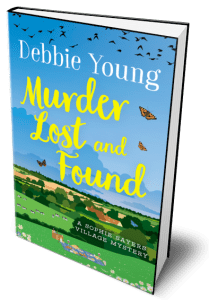 Just 33 days to go (from the date of this blog post) until Murder Lost and Found is unleashed on the world – the seventh Sophie Sayers Village Mystery.
In this story, set in the school summer holidays, Sophie finds a dead body in the school lost property cupboard – but her plans to investigate are scuppered when it promptly disappears!
Join Sophie, Hector, Billy, Tommy and their fellow villagers – and meet some new characters too, including an irreverent trio of workmen building a new playground and a new member of staff at Hector’s House!
Murder Lost and Found was originally intended to complete the series of seven novels, seeing Sophie through her first year in the village, and running the course of a village year from one summer to the next. However, due to popular demand, there will be at least an eighth novel in the series, set in the Scottish Highlands, and further spin-offs, including more in the Tales from Wendlebury Barrow series of quick-read novelettes featuring Sophie and friends.
PRE-ORDER YOUR COPY HERE (EBOOK)
(Paperback will be available from launch date of 23rd May)


