
As a fair-weather gardener, I’m only now emerging from hibernation to tame the garden for the summer.
In my personal horticultural calendar, I have a limited window for tackling weeds. If I haven’t got my plot under control by the start of September, I give up. I know nature will soon side with me and stop the weeds growing in winter. I’m in awe of anyone who gardens all year round. I don’t venture out until dock leaves dwarf fading tulips and dandelions dominate the lawn.

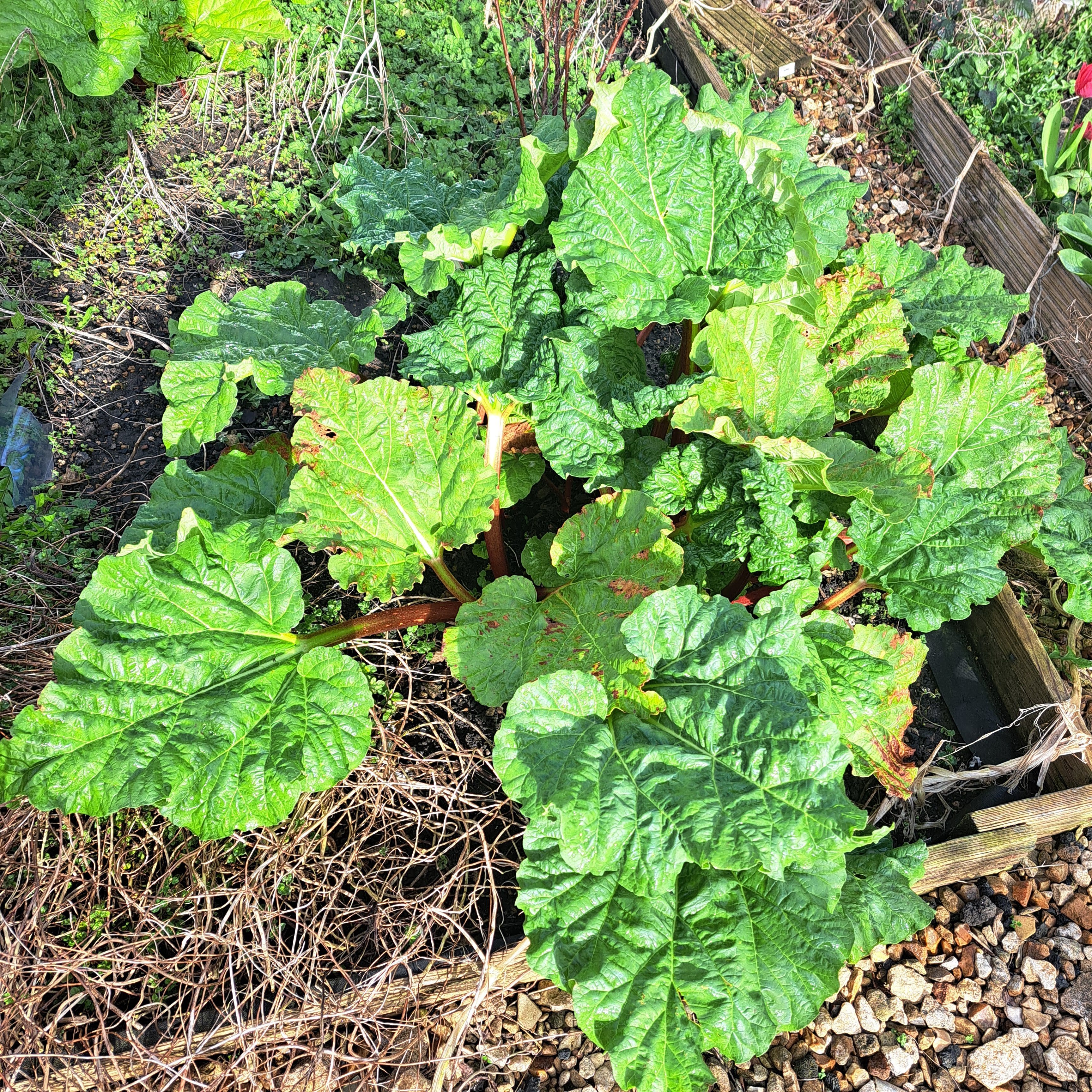
By this time, the task of clearing the weeds seems overwhelming. But it doesn’t take much to lift my spirits. Discovering bright bouquets of rhubarb quietly colonising the vegetable patch does the trick. (Technically, rhubarb is a vegetable, not a fruit.) Lime-green leaves unfurling from blush-pink stems send a welcome semaphore message: “It’s crumble time!”

We’ve long since exhausted our frozen stocks of last year’s apples, plums, and pears. This year’s crop of tree fruit is still months away, and the apple trees haven’t even started blossoming yet. So, this copious crop of rhubarb, ripe for pulling, is a welcome sight indeed. There’s enough here to keep us going for months of Sunday lunches.
Rhubarb offers a generous return on very little labour. The only maintenance it requires is the division of its crowns and the occasional feed. It’s a bonus that the vast leaves, though poisonous to eat, make a useful addition to the compost heap.
In my Cotswold garden, rhubarb is so easy to grow that I’m surprised it’s not native to Britain. It didn’t reach Europe until the fourteenth century, first via the Silk Road and later from Russia. This long journey made rhubarb an expensive status symbol, alongside silks and spices.
Ironic, then, that its name has become a slang word for “rubbish”, as in “You’re talking rhubarb”. Why be so rude about rhubarb?
The answer lies in the traditional use of the word on stage in crowd scenes. It’s a very soft word, as shapeless and slithery as stewed rhubarb. (Unlike carrot or potato, for example.) When we hear actors mumble “rhubarb, rhubarb”, we know they’re saying something, but we can’t make out what. We recognise the chattering of the crowd, but we’re not distracted by meaning.
In 1970 Eric Sykes celebrated the tradition with his television comedy special, Rhubarb. Its only dialogue is the repetition of the word “rhubarb” – surely the easiest lines any actors have ever had to learn. He made a second version ten years later, called Rhubarb Rhubarb.
It seems I’m not the only person who can’t have too much rhubarb.
This post first appeared in the Tetbury Advertiser’s May 2024 edition.

I loved the Eric Sykes! Thanks for including that, Debbie. But why no recipe for rhubarb crumble??
Oh gosh, I missed a trick there, Rory! To be honest, I don’t weigh ingredients when I’m making a crumble – I just chuck in handfuls of flour with a bit of butter, then add sugar (preferably brown) when I’ve rubbed the flour and butter into breadcrumbs, then add a handful of oats so that I can pretend it’s healthy! (The rhubarb is very healthy of course!)