
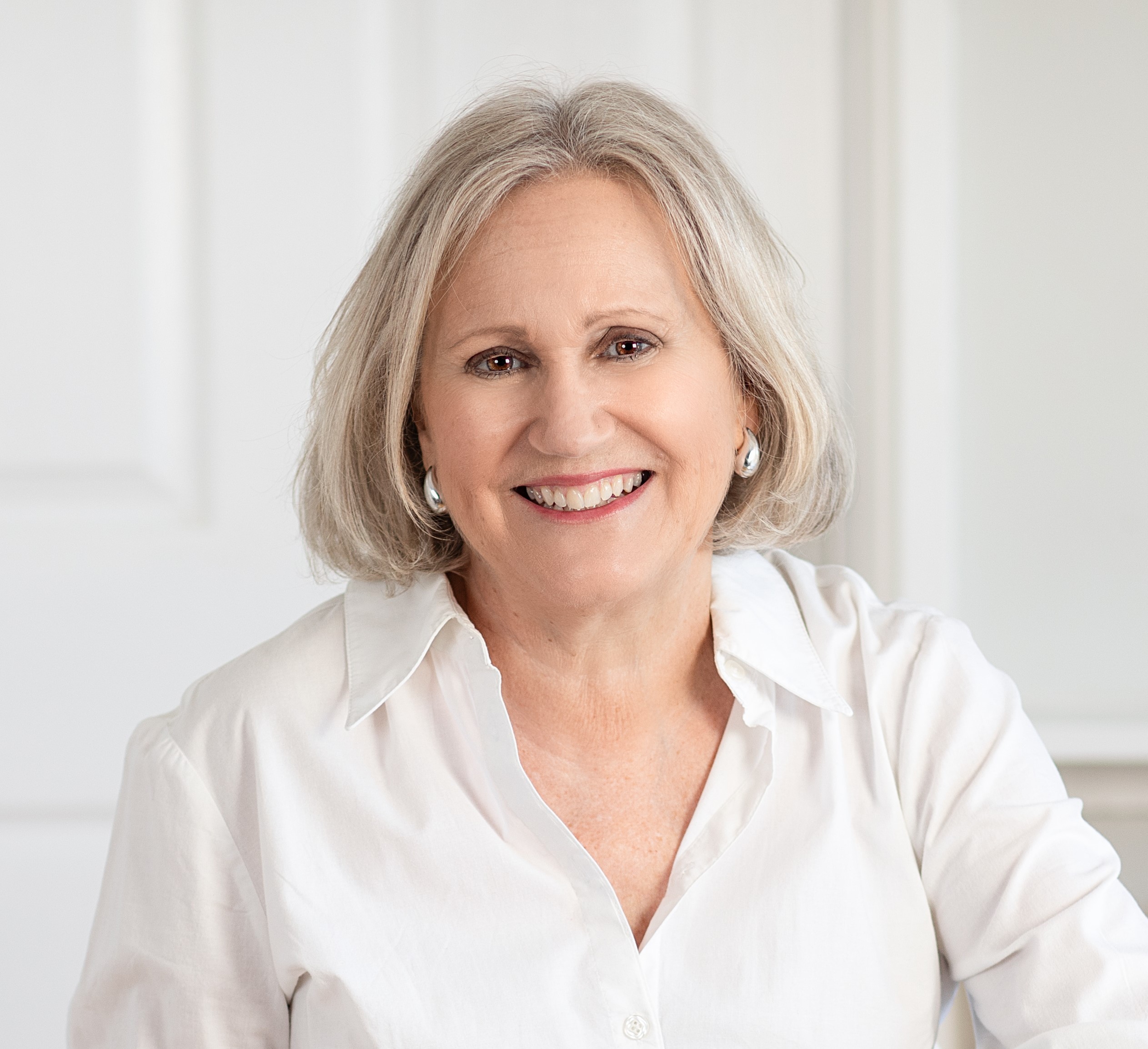
 When I heard that my wise, witty and smart author friend Dr Carol Cooper had been commissioned to write a book called A History of Medicine in Twelve Objects, I was impatient to read it. I love any book that makes history more accessible via the lens of a well-chosen list.
I first came to know Carol through her compelling novels, two set in London and one in Alexandria, Egypt, where Carol grew up, and we’ve long been members of a wonderful writers’ group called The Sanctuary. Carol has also had a distinguished career in medicine as a practising doctor, as a lecturer, and medical journalist, and is a fellow of Newnham College, Cambridge, her alma mater.
I knew this new book was going to be a great read, so was glad to receive a review copy prior to publication. I couldn’t put it down.
It’s the sort of book where you find yourself reading aloud fascinating snippets to whoever else is in the room.
In accessible, easy-to-read style, Carol describes the stories behind the invention of the titular twelve objects and how they each revolutionised a branch of medicine. She also includes fascinating anecdotes about the characters involved along the way, including patients as well as the pioneers behind the inventions.
Available in hardback, ebook, and audiobook narrated by Carol, The History of Medicine in Twelve Objects would make an excellent Christmas present for anyone interested in public health and medical matters, and for readers who enjoy popular science books.
I’m very pleased to welcome to join us on my blog today to share more insights into her new book.
Debbie: Carol, you were commissioned to write this book when your publishers identified a gap in the market for a history of medicine viewed through a number of key objects. What made you the perfect person to write it?
Carol: It was an idea that my agent and I had tossed around. While I loved the concept, I wasn’t that keen to write the book at first because I was engrossed in drafting a novel. But as you see I gradually came round to it. Why me? Well, I’m not a historian, but I do sometimes feel like a relic from days of old. I’ve been a doctor for many years, worked in several different major specialities including orthopaedics and chest surgery, and seen many changes over time. I suspect it was my long experience of medicine along with an almost equally long career as a journalist and author that helped convince publishers.
Debbie: For a while now there has been a vogue for viewing particular aspects of the human experience through the prism of a list, eg Neil MacGregor’s A History of the World in 100 Objects. Was the number twelve imposed on you or did you choose the quantity – and if the latter, what were your criteria for choosing them?
Carol: You can see the appeal of those lists. Each of my objects tells a story. It speaks of the ingenuity applied to solve a problem, which in many cases is a life-or-death situation. Objects come from a particular time, and may be typical of a certain culture. Ten was the number that my agent first had in mind, but I thought it would be impossible to cover the range of medicine in just ten objects, so we stretched it to twelve.
I could have chosen thirty or fifty, but I wanted to delve into the lives of the trailblazers and their patients, not just describe the tools.
I selected objects that were developed primarily for treating people, a criterion that excluded such things as thermometers. Each one also had to be important in helping to develop a particular speciality or, as in the case of the microscope, for instance, to lead to discoveries that completely changed medicine. While the chapters chart a progression over the centuries, you could read each one on its own, or in a different order.
Debbie: Of course it’s really far more than 12 objects because in each section you elaborate on various iterations of a particular item over the centuries, and in some cases across millennia. Do you have a personal favourite chapter or object?
Carol: I love the heart-lung machine. It goes back to the early 1950s, so I never knew a time when it didn’t exist. But, when I was a junior doctor at Harefield Hospital, Northwest London, I learned about the era before cardiac bypass, when surgeons could only attempt open-heart surgery by reducing the patient’s metabolism.
That’s because the brain can only last four minutes without oxygen-rich blood, which, as you can imagine, severely limits what surgeons can do.
Thomas Holmes Sellors and his team at Harefield made use of hypothermia. They literally dunked their patients into an ice-cold bath to bring down their core temperature and reduce their metabolic need for oxygen. And that enabled daring new operations that gave new life to blue babies and others with congenital heart disease. Many of these conditions can now be totally corrected with the help of the heart-lung machine, along with the appropriate expertise.
When I worked at Harefield, wards were full of children from all over the world with various types of cardiac problems that would have been lethal only a short time before.
As I recount in the book, the heart-lung machine was the pipedream of a young doctor called John Gibbon at Massachusetts General Hospital. It was 1931 and he was at the bedside of a desperately ill patient for whom he could do nothing, other than sit with her through the night and watch her die. What if, he wondered… That patient died, but twenty years later Gibbon and his wife Mary, who was also a scientist, had developed his madcap idea into a workable heart-lung machine.
Debbie: Which of the 12 objects has saved the most lives or had the biggest impact on the welfare of mankind?
Carol: That’s a tough question. The humble hypodermic is essential to modern healthcare, but I think my answer would be either the microscope or the X-ray machine. The microscope brought with it the germ theory of infection. Without it, we might still be clinging to wrong-headed notions about disease, like the “four humours” that so convinced Hippocrates and Galen.
- The microscope led to vaccines, antibiotics, and accurate ways to study tissues (for instance, in a sample taken at biopsy).
- The X-ray machine has revolutionised both diagnosis and treatment by allowing doctors to see inside the body without relying on guesswork, or operating to take a look, or waiting for the post-mortem.
Even today, many parts of the world don’t have access to X-rays and other imaging procedures.
An invention in itself doesn’t save lives. It has no value unless it’s made available to those that need it.
Debbie: You’ve gone into tremendous and fascinating detail. (It would make a great source book for the “Elves” who research the TV programme QI!) How did you go about the necessary research and how long did it take you?
Carol: I’ve no real idea how long it took because I enjoyed it so much. But I can tell you that I had around nine months to write the book and I spent a lot of it in Cambridge’s splendid University Library which holds a copy of every book ever published, along with most of the journals. I was also privileged to use the library in my own college. As well as having delightful buildings and gardens, Newnham has one of the best-stocked college libraries in the university. As a women’s college, it always had to. For a long time, women students at Cambridge were barred from using the university’s facilities.
Debbie: What surprised you the most among the facts you uncovered?
Carol: One surprise was that, sometimes, the person I’d always thought had made a particular discovery was not, in fact, the first to do so. I’ve included several examples of this, for instance, in the chapter on X-rays. Writing up one’s work is a good way of establishing priority of discovery, hence the saying “Publish or perish,” but there’s often more to it.
The person that posterity celebrates is sometimes the more prominent person, or the more academic, or the one with friends in high places.
There’s also that other well-known saying: “It’s not what you know, it’s who you know.”
Debbie: It’s much more than a history through objects, because these objects didn’t spontaneously generate – they are the result of the tremendous inventiveness, imagination and perseverance of bold, extraordinary thinkers. Many of these were also incredibly brave, first testing their theories and creations on themselves. If you could give your own version of the Nobel Prize for Medicine to the most remarkable of these pioneers from down the centuries, which would you choose, and why?
Carol: The first Nobel prizes were awarded in 1901, so there are many innovators who missed out on a laureate because they were born too soon. That makes it hard to choose just one to honour, but I think I would nominate French doctor René Laennec who invented the stethoscope in 1821.
The normal way of listening to a patient’s chest in those days was to put one’s ear directly onto the chest. One particular day, however, Laennec’s patient was a curvaceous young woman. It was awkward. On the spur of the moment, he picked up a notebook, rolled it up, and used it as a tube to listen to his patient’s chest.
This serendipitous invention led to a more scientific approach to medicine, especially diseases of the chest like TB. Laennec studied all the different sounds that could be heard with a stethoscope, and correlated them with symptoms. He then published his work in a massive tome that became a classic. Less well-known is the fact that Laennec listened to his patients as they told him of their worries.
He was a true scientist, but he was also patient-centred, and I think he deserves the highest accolade.
Debbie: Fast forward to the 21st century, and are there still opportunities for individuals to make a huge difference like a modern-day Pasteur, for example, or are we now in the hands of big pharma and capitalist businesses bent on profit rather than the common good? (Many of the pioneers you describe made very little money from their inventions.)
Carol: I think there are still lateral thinkers who will come up with valuable ideas, but we live in a different world.
Nowadays any new advance has to be evidence-based, so the clinical trial is king.
And that’s often expensive. These days more than ever, an innovator needs backers to supply necessary funds for trials, and then, if those are successful, to help their ideas gain traction.
Debbie: You also write novels, each with a medical element – can you please tell us a little about each of your works of fiction.
Carol: My first two novels are contemporary stories set in London. In One Night at the Jacaranda, the characters are looking for someone special, and each one of them is lying. For instance, the ex-con conceals his stretch inside, the charity worker keeps quiet about his terminal cancer diagnosis, and the GP lies about his job because he’s sick of people telling him their symptoms. It’s light in tone, but the serious point is that you can’t build a relationship on a foundation of lies.

Hampstead Fever continues the story for some of the characters and introduces new ones as they grapple with work, children, ageing relatives, and the other challenges life throws at them.

The Girls from Alexandria is different in that it takes place mainly in Egypt, where I grew up, and much of the action goes back to the glamorous fifties and sixties. The main character is seventy-year-old Nadia who’s losing her mind. If she doesn’t find her sister, who is her one surviving relative, she will end up in a care home. The snag is that Nadia’s sister disappeared some fifty years ago, and nobody believes she even existed.

All my novels are multicultural and have a medical thread running through them – there are sick children, stressed doctors, confused seniors, and a number of medical conditions even if they’re not always the main thrust of the story. I believe that writing what you know makes a story more authentic and more believable.
Debbie: Carol, thank you so much for taking the time to join us here on my blog today. It’s been an absolute pleasure, and may The History of Medicine in Twelve Objects be a Christmas bestseller!
More About Dr Carol Cooper
 Dr Carol Cooper is a doctor, journalist, and author. She taught students at Imperial College Medical School for almost twenty years, for which she received the Outstanding Contribution to Teaching Award in 2022. She was elected President of the Guild of Health Writers in 2014, and is a Fellow of Newnham College, Cambridge, her alma mater. Carol has authored and edited a string of non-fiction books on health and medicine, including an award-winning book on general practice. She also writes novels with a medical strand. Best of all, she has three amazing sons.
Follow Carol on her website at www.drcarolcooper.com and on Instagram at @drcarolcooper, where she often shares fascinating facts related to her books and her writing life.

 Hello, Carol, and welcome! Can you please start off by telling us a little more about the setting of your new novel.

