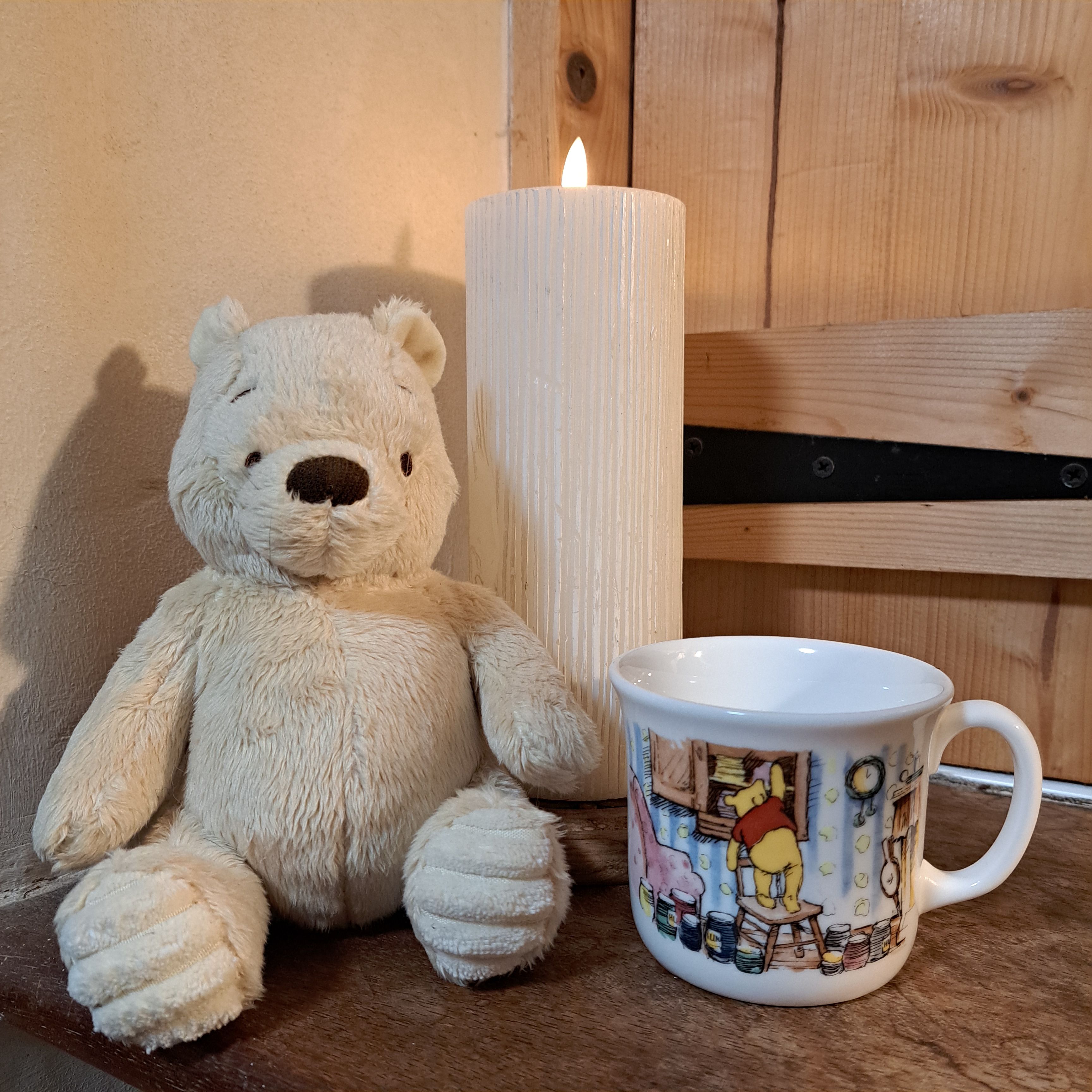
If it weren’t for my aversion to honey, I’d believe that in a former life I must have been a bear. As soon as the clocks go back in the autumn, I sleep a little longer each night, peaking at ten hours in midwinter. I hate the short days and long nights of winter.
I love new beginnings, whether of a month, a season, a school term or a year. When I’m feeling restless, as I always am by this time of year, any excuse for a fresh start will do.
So you may imagine my delight that 1st March not only marks the start of a new month and will usher in a new season, but it is also the beginning of the ancient Roman ten-month year.
Yes, ten months – which explains why our names for the ninth, tenth, eleventh and twelfth months are confusingly based on the Roman numerals for seven, eight, nine and ten – septem, octo, novem and decem.
Of course, the winter months that they eventually designated January and February existed, but for a long time they refused to acknowledge them with a name, as if in punishment for their lack of productivity.
Three new beginnings in one fell swoop! My only disappointment is that March was so called in honour of the Roman god of war, because it was considered the right time of year to resume military campaigns interrupted by winter. Mars was also considered a guardian of agriculture, and his month the beginning of the farming year. If the Roman Empire had had a 21st century-style advertising industry, Mars would have been the obvious poster boy for gardening productsdesigned to wage war on weeds.
A rather cheeky Mars, drawn by Moses ter Borch in 1660, now in the Rijksmuseum (image in public domain via Lookandlearn.com
To my peace-loving brain, the mention of the name Mars is more likely to conjure up the image of the classic chocolate bar than of the Roman god of war. (Other chocolate bars are available, as the BBC might say.)
According to Google, the British Task Force took three million Mars bars to the Falklands in 1982. The manufacturer’s marketing department must have been tempted to add “fight” to its famous catchphrase, “A Mars a day helps you work, rest and play”.
(Image public domain via Wikimedia Commons)
But that has nothing to do with the naming of the bar, which by the time of the Falklands War was fifty years old. Like its arch-rival Cadbury’s chocolate (founded 1824), the bar and the company was named after its founding family.
In 1932, in the unlikely setting of Slough, one Forrest Mars,Sr. devised his eponymous snack. The son of the American industrialist Frank C Mars, Forrest belonged to the second generation in a dynasty of candy manufacturers destined to became the richest family in America. This bevy of billionaires still owns the confectionery company – a refreshing change when so many great brands, including our beloved Cadbury, have been absorbed by vast international conglomerates with less cosy names. (Mondelez International in the case of Cadbury – who knew?)
A more scientifically-minded (or less greedy) person than me might sooner associate the name Mars with the Red Planet, which, like Earth, has four seasons, but each lasts twice as long as ours, due to the 687 days in the Martian year.
That’s a long haul between new beginnings. One of many reasons that I’m glad to be starting another spring on Planet Earth.
This post was originally written for the March 2022 issue of the Tetbury Advertiser.
FOR MORE NEW BEGINNINGS
“A cracking example of cosy crime” – Katie Fforde“The perfect book – I loved it” – Katie Fforde
Both my series of novels begin with a young woman starting afresh in a new home – Sophie Sayers in the Cotswold village of Wendlebury Barrow in the Sophie Sayers Village Mysteries, and Gemma Lamb at the quirky English boarding school for girls in the Staffroom at St Bride’s series.
Follow their adventures from the start in Best Murder in Show and Secrets at St Bride’s, both available as paperbacks, ebooks and audiobooks.
Sunset on Starveall Lane, one of the single-track roads that leads into Hawkesbury Upton
Every month, I write a topical column for the Hawkesbury Parish News, the local magazine run by an apparently tireless team of volunteers, for the benefit of everyone within our local community.What could be more topical for an English village in the middle of winter than a heartfelt longing for signs of spring?
Yesterday mid-morning, in a brief interlude between torrential downpours, there was a clear, fresh quality to the daylight in my back garden. If I were an artist, I would have been reaching for my paints, eager to capture the arrival of spring. Yet the calendar told me winter would last two more months.
I welcomed the arrival of this blackbird every morning last week as it worked its way through old apples left over from last autumn
Unlike my husband, I don’t always trust supposedly scientific evidence. Our bathroom scales are another case in point. Bringing them into the bedroom to weigh himself last week, he was startled to find he’d lost ten kilos. “Put them back in their usual place and try again,” I advised.
Sure enough, when returned to the bare boards of the bathroom floor, the scales showed his usual weight. Those ten kilos were never lost – they were just temporarily mislaid. Like his car keys and his phone, which go missing several times a week, I knew they’d turn up eventually.
Weight is in any case relative and not worth getting worked up about. At my health MOT at the GP surgery last week, the nurse congratulated me: “Well done, you’ve lost five pounds since this time last year.”
Taking the compliment with good grace, I chose not to confess that I’d actually lost a stone – and then regained nine pounds.
But I’ll store up my husband’s experience for future reference. Then when I really want to lose weight and keep it off, I’ll just put the scales on the bedroom carpet.
More signs of spring in the Cotswolds: carpets of snowdrops at the churchyard in Slad, resting place of the writer Laurie Lee
And In Case You’re Impatient for Summer…
A Free Summer Read!
A fun story set in high summer in a classic English village – first in a series of five novels (book six due out at the end of February!)
If these signs of spring aren’t enough to lift your spirits, here’s a chance to download a free ebook of my novel set in high summer, Best Murder in Show. For a limited time only, the ebook edition is available to download free of charge from all good ebook retailers (Kindle, Kobo, Apple, etc).
Why am I giving it away? I’m hoping readers will get hooked and go on to buy the rest of the series – especially as book six in the series, Murder Your Darlings, is due out at the end of February!
Fortunately, it costs me nothing to give away an ebook as the file is a digital download, with no print or delivery costs. I just wish I could do the same with paperbacks!
My regular Young By Name column made the front cover in this issue (Click image to read whole issue online)
This post first appeared in the Tetbury Advertiser‘s February 2019 edition.
I make no secret of the fact that I hate February, with its dull, short days, and no redeeming feature besides brevity. At least January includes my birthday (the day I’m writing this). But by February, I am usually pining for blue skies, bright flowers, and green leaves, instead of grey, grey, grey, and I’m longing to flip the calendar to March.
But this year my attitude has changed after reading some books about early polar explorers, including Michael Palin’s Erebus: the Story of a Ship. These books have given me a new perspective not only on the frozen north and south but also on my home turf.
Armchair Travellers All
Although few of us have come close to the North or South Pole, these days we all feel we know what the Arctic and Antarctic landscapes looks like, thanks to television documentaries. Not so for the early explorers. Obviously there was no television, but even photography was in its very infancy. The daguerrotypes taken of officers before the Erebus set off in search of the North West passage were the very latest in 19th century technology. Only in the 20th century did we start to see photographic evidence such as the remarkable work of Frank Hurley, whose accompanied Shackleton and others. The only visual records of the Erebus’s journeys north and south are the crew’s drawings and paintings.
According to Michael Palin, one of the crew in the Erebus’s early 19th century polar voyages was startled at his first sight of icebergs, expecting them to be clear, like ice cubes in a glass of Scotch. They’d never seen Antarctic penguins, either, although they might have spotted variants native to South America, South Africa and Tasmania on their way south.
Picking Up On Penguins
But how much more remarkable would a penguin find the Cotswolds? There’s so much here that is completely absent from the Antarctic: trees, grass, and other terrestrial plants and flowers; stone walls dividing fields; rolling green hills instead of stark mountains; roads and automobiles; four-legged animals; and, for the most part, people.
Set a penguin down in the middle of Tetbury, or anywhere in the Cotswold countryside, and its mind would surely be blown by the extraordinary display of colour, texture, shapes and sizes, even in the middle of winter, compared to the whites, blues and greys down south. If you wanted to break your penguin in gently, you could show a bit of camaraderie by wearing a dinner suit, and find it a field carpeted with snowdrops.
So this year I have a new strategy to stop me succumbing to the February blues. Instead of bemoaning the grey winter days, I will try to view the local landscape through the eyes of a visiting Antarctic penguin. The transformation is remarkable, like the scene in The Wizard of Oz where Dorothy opens the door of her black-and-white house to reveal the glorious Technicolor Munchkinland.
Even so, I’ll still be craving the spring.
And in the spring, Sophie Sayers’ fancy lightly turn to thoughts of… murder!
If you’d like a bit of spring reading to cheer you up, Springtime for Murder, Sophie Sayers’ fifth village mystery, could just hit the spot. Available in paperback online and to order from all good bookshops, and also as an ebook for Kindle. For more information, and to read the first chapter on my website, please click here.
(This post first appeared in the February issue of the Hawkesbury Parish News)
Snowdrops by the roadside between Hawkesbury Upton and Wotton under Edge
Weary of the continuing long dark nights, today I drove to Wotton in the daylight for the first time this year. Catching sight of the snowdrops lining the roadside banks cheered me up no end.
Visions of their natural successors in order of flowering – daffodils, wild garlic, bluebells – rushed through my imagination like a speeded-up nature film, fast forwarding me to spring.
Despite the plummeting temperature, I felt warmer than I had done for days.
Not for nothing do snowdrops symbolise hope in the traditional language of flowers.
I was reminded of the effect that daffodils had on Wordsworth, buoying him up long after he had got back to his cottage in the Lake District:
For oft, when on my couch I lie In vacant or in pensive mood, They flash upon that inward eye Which is the bliss of solitude; And then my heart with pleasure fills, And dances with the daffodils.
William Wordsworth – from I Wandered Lonely as a Cloud

 If it weren’t for my aversion to honey, I’d believe that in a former life I must have been a bear. As soon as the clocks go back in the autumn, I sleep a little longer each night, peaking at ten hours in midwinter. I hate the short days and long nights of winter.