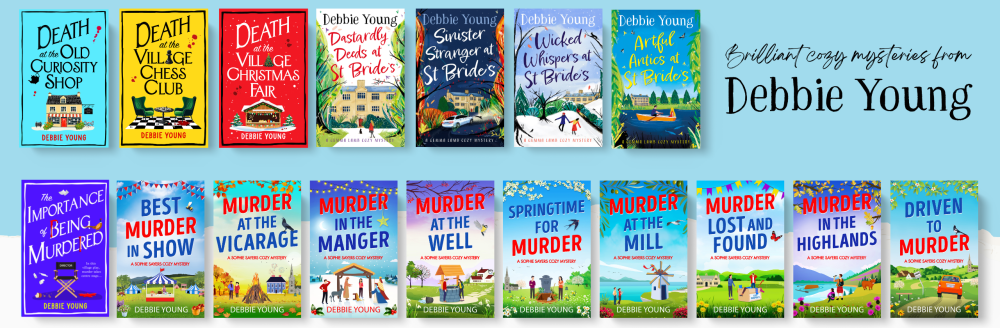
Hilarious, heartwarming mystery & mayhem set mostly in the Cotswolds
Author: Debbie Young
Author of feelgood contemporary popular fiction, including three series of cozy mystery novels and four collections of short stories. Published in English, German, and Italian. Represented by Ethan Ellenberg Literary Agents. Founder and director of the Hawkesbury Upton Literature Festival. Course tutor for Jericho Writers. Member of the Society of Authors and the Alliance of Independent Authors.
Lives and writes in a Victorian cottage in the beautiful Cotswold countryside.
This week, another post about an aspect of my writing life, as featured in the September issue of the Tetbury Advertiser.
Tidying my study after the summer holidays, I declutter my desk, taking it down to bare essentials. There’s a pen tray and bottle of ink, a pencil pot, a shelf of project notebooks, and a stack of four in-trays, one tray for each area of my working-from-home life. This orderly setup makes me feel in control when other evidence points to the contrary.
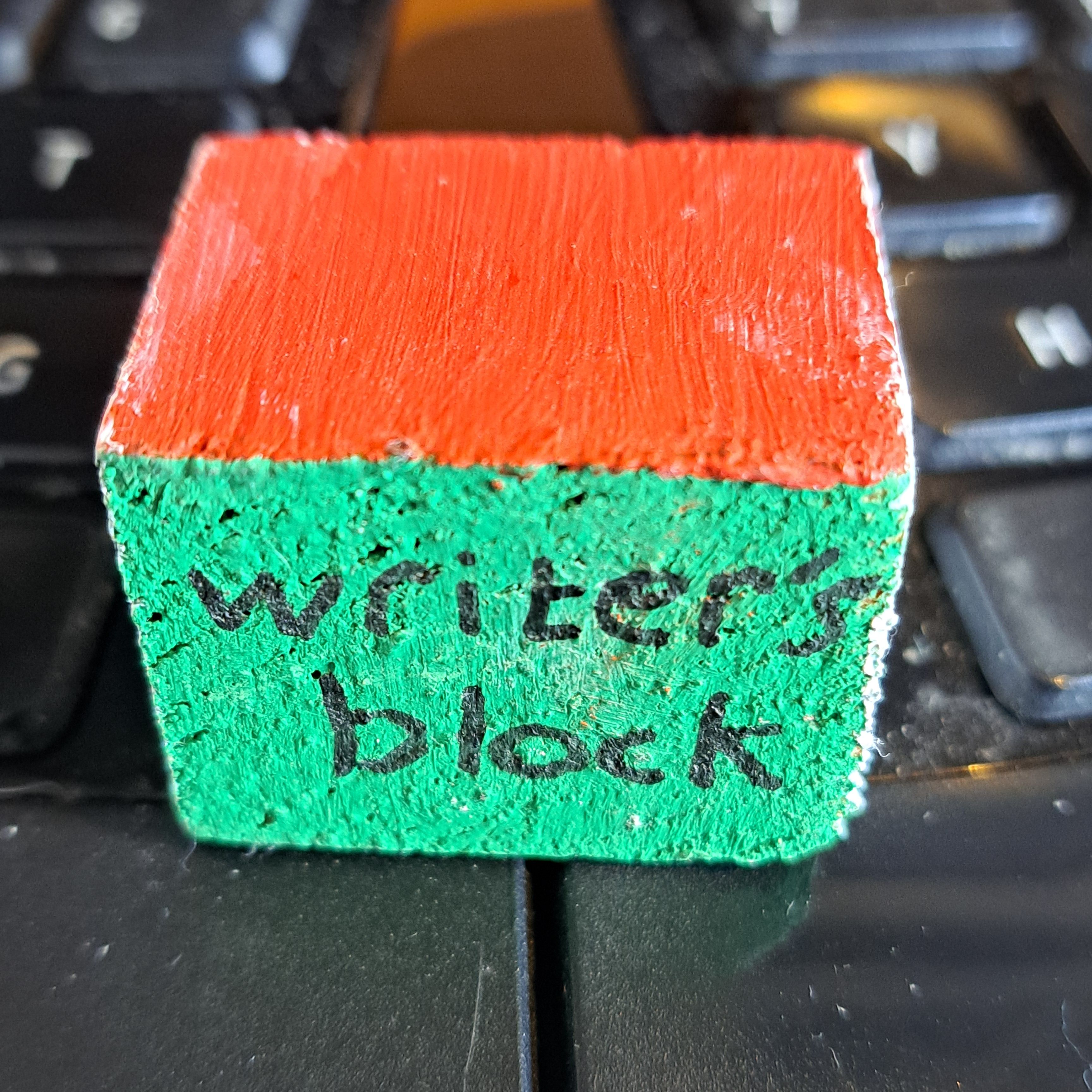
More important, though, are four tiny talismans. Not otherwise superstitious, I regard these talismans as essential tools of my trade.
Writer’s block: it’s a term lots of people bandy around as if it’s some kind of medical or psychological condition that blocks creative flow.
I have strong views about writer’s block, which I shared in my talk the Troubador Publishing‘s annual Self Publishing Conference in Leicester on Saturday. While the talk is still fresh in my mind, I thought I’d share my reasoning in this week’s blog post.
Whether or not you are a writer, I hope you’ll find it interesting, because the same principles apply to other forms of activity.
Living in a small Cotswold village with a lively community provides ideas and inspiration for writing my cosy mystery novels. I’ve served on many committees, belonged to different organisations, and taken part in lots of activities since I moved here over thirty years ago.
One of my favourite activities here is ringing the church bells, which were installed in our parish church of St Mary the Virgin, Hawkesbury in 2021. As I soon discovered, in the English tradition of circle-mounted church bells, there’s much more to church bell-ringing than one might think. Full-circle ringing is not just a question of pulling the end of a rope at random.
I soon became hooked, and I’m now evangelical about this ancient craft. In my column for the September issue of the Hawkesbury Parish News, written during a month with a busy ringing schedule, I wrote the following piece to encourage others.
Writing this column in between two weddings and VJ80 Day, all three of which events involved bell ringing at our parish church, I’d like to share some of the surprising benefits of being a bell ringer. You never know, my revelations might persuade you to give it a try yourself.
1. Exercise
The slow, steady pulling of the bell rope (sally) against the resistance of a bell’s weight provides a gentle but significant workout in manageable bursts. Time and again, ringers arrive at the tower saying, ‘Not sure I can ring tonight, I’ve put my back out’ – only to skip down the tower stairs afterwards, fully restored.
The complex framework that holds bells for full-circle ringing, pictured in Matthew Higby’s workshop before installation at St Mary’s (Photo by Sir Ian Macfadyen)
2. Teamwork
While each person is responsible for only one bell, we work as a band led by a conductor, just like any other group of musicians – only our instruments are bigger than everyone else’s.
Learning the basics of bell ringing on the dumb bell, under the guidance of St Mary’s Tower Master Colin Dixon
3. Belonging
The mental health benefits of feeling part of a community are well known. Bell ringing creates a great sense of camaraderie, not only in one’s home tower, but at other churches. Travelling beyond the parish, bell ringers are assured of a warm welcome in any other tower.
Photo by Anne Bishop, a Canadian visitor who tried her hand at ringing
4. The Best View
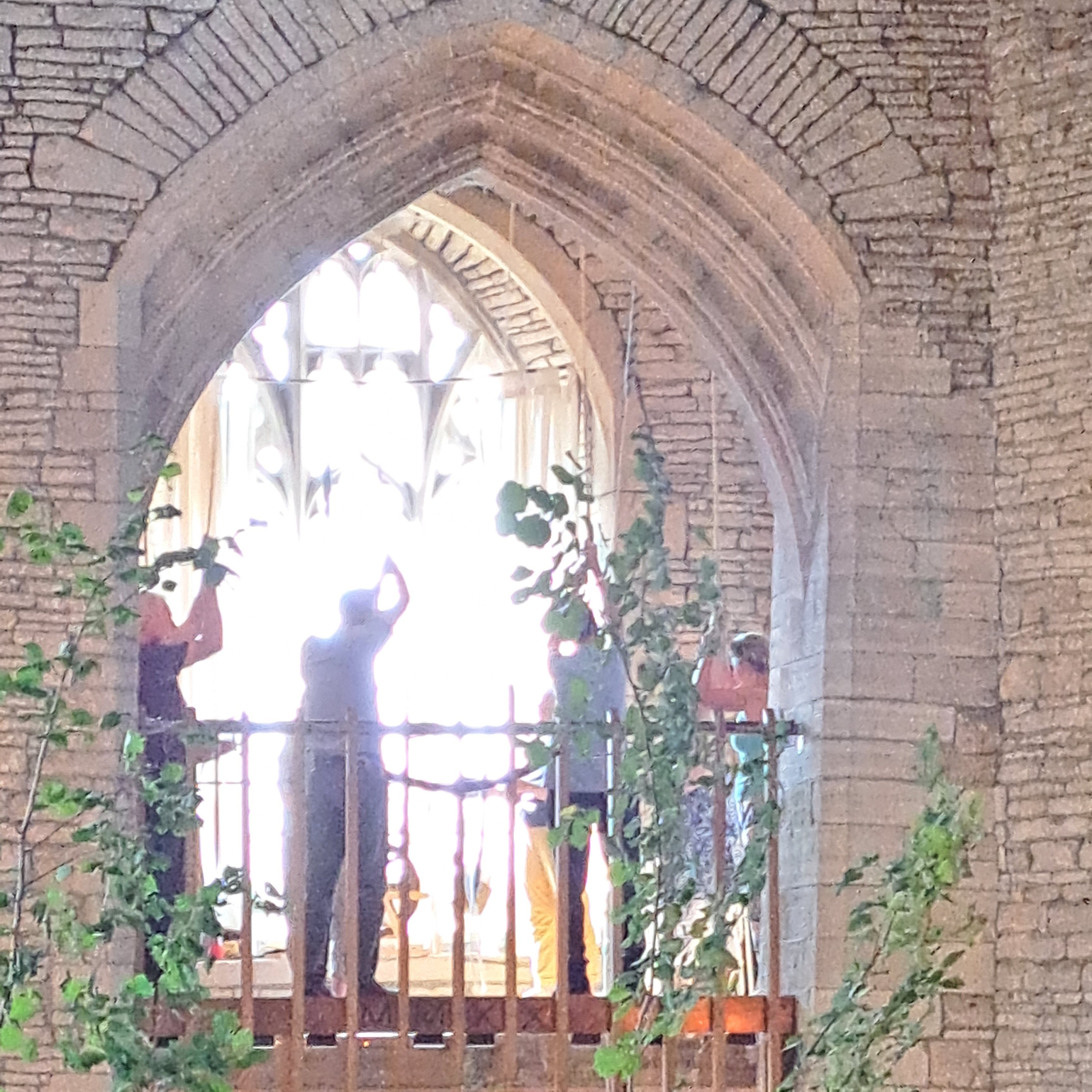
Because we ring in an open-sided chamber rather than on an enclosed platform, we have the best view in the house. It’s especially enjoyable at weddings, watching from above as the bridal party processes.
The ringing chamber viewed from the nave of St Mary the Virgin Hawkesbury
… and the view of a wedding from the bell ringing platform
5. Historical Role
We play a part in history, not only on a local level at parishioners’ christenings, weddings and funerals, although that’s also an honour. It has been a memorable privilege to ring to mark the death of Queen Elizabeth, the proclamation of the King, his coronation, VE80 and VJ80. It’s especially exciting when we know we’re ringing simultaneously with ringers nationwide, even though we can neither hear nor see them.
It was an honour to be part of the national programme of rinigng for the coronation of Charles III
6. Tradition
We’re keeping an ancient craft alive. I learned to ring to honour the memory of my great-grandfather, a distinguished ringer of complex peals of 12 bells long before I was born. I may never be able to ring to his standard, but that feeling of following in his footsteps and passing ringing on to future generations is priceless.
My great grandfather, an accomplished bell ringer
New bell ringers are always welcome at St Mary’s. No experience is necessary, and free training will be given. Most ringers aren’t religious, and you won’t be expected to stay for church services or to commit to specific ringing events. So if you fancy trying your hand at bell ringing this autumn, contact Colin Dixon, St Mary’s Tower Captain, or join us at St Mary’s at practice nights, 6.30-8pm every Wednesday. All ages welcome – you just need to be tall enough to reach the ropes.
PS Just thought of bonus point 7 – as the nights draw in and temperatures dip, it’s worth knowing that ringing church bells will warm you up in winter!
…in which the mystery is resolved in the bell tower of the parish church in Little Pride
If you’d rather read about bell ringing than ring in real life, try my cosy mystery novel, Death at the Village Chess Club, where the denouement takes place at the bell tower!
PPS Our parish church of St Mary the Virgin, Hawkesbury, will be the setting for the next Hawkesbury Upton Literature Festival event on Saturday 27th September, with a fabulous day of talks, readings and panel discussions on the theme of “Strength of Character“. For more information and to book your tickets now, visit hulitfest.com. I’d love to see you there!
Usually, I prefer to read the original book before watching a film or TV series of it, but in the case of Evelyn Waugh’s heartrending Brideshead Revisited, I first experienced it as the very faithful BBC TV dramatisation in the 1980s, starring Jeremy Irons as the narrator, Charles Flyte. Waugh has since become one of my favourite authors, and I’ve read many of his books many times.
Needing something soothing to listen to in the car on long journeys, I downloaded the Audible edition of Brideshead Revisited, narrated by Jeremy irons. It’s a flawless rendition, with Irons rendering the voices of the many characters, male and female, with a multitude of accents.
I was instantly transported into the heady world of the book, and long drives flew by – even though I’m not usually very good at listening to fiction on audio, able to concentrate better on non-fiction.
This audiobook was a hard act to follow, but I’m now revisiting another Waugh favourite, the darkly comic novel Scoop, narrated equally brilliantly by Simon Cadell.
When, as a child, I used to play with my grandma’s button box, I admired each button like a tiny work of art.
Born in 1900, Grandma grew up fastening her button-boots with buttonhooks. As a young woman, she embraced flapper styles. The contents of her tin gave a miniature history of twentieth-century fashion.
My mum (91) still has her own button box from when she used to make clothes for her children. Her 21st birthday present was a hand-cranked Singer sewing machine, on which I later learned to sew.
My mum’s button box
My grandma and my mum used old toffee and biscuit tins as button boxes. But my buttons live in a smart Cath Kidston tin, labelled The Book of Buttons.
My daughter uses a tartan shortbread tin to house hers.
The contents of every button box are unique. Plunging your hand in is like a lucky dip. You never know which tiny treasure you’ll pull out, nor its provenance.
Whose duffle coat did this toggle once fasten?
Which child fiddled with this little blue one on their school cardigan during a tedious lesson?
What kind of party dress did this diamante disc once adorn?
Last century, every home had a button box. These days, with fewer people making their own clothes, it’s an endangered species. Yet it’s easy to keep the tradition alive. You can buy interesting vintage buttons in any charity shop or thrift store. If you’re lucky, you’ll find something similar to the fancy fastener at the heart of the mystery in my new novel, Death at the Village Christmas Fair.
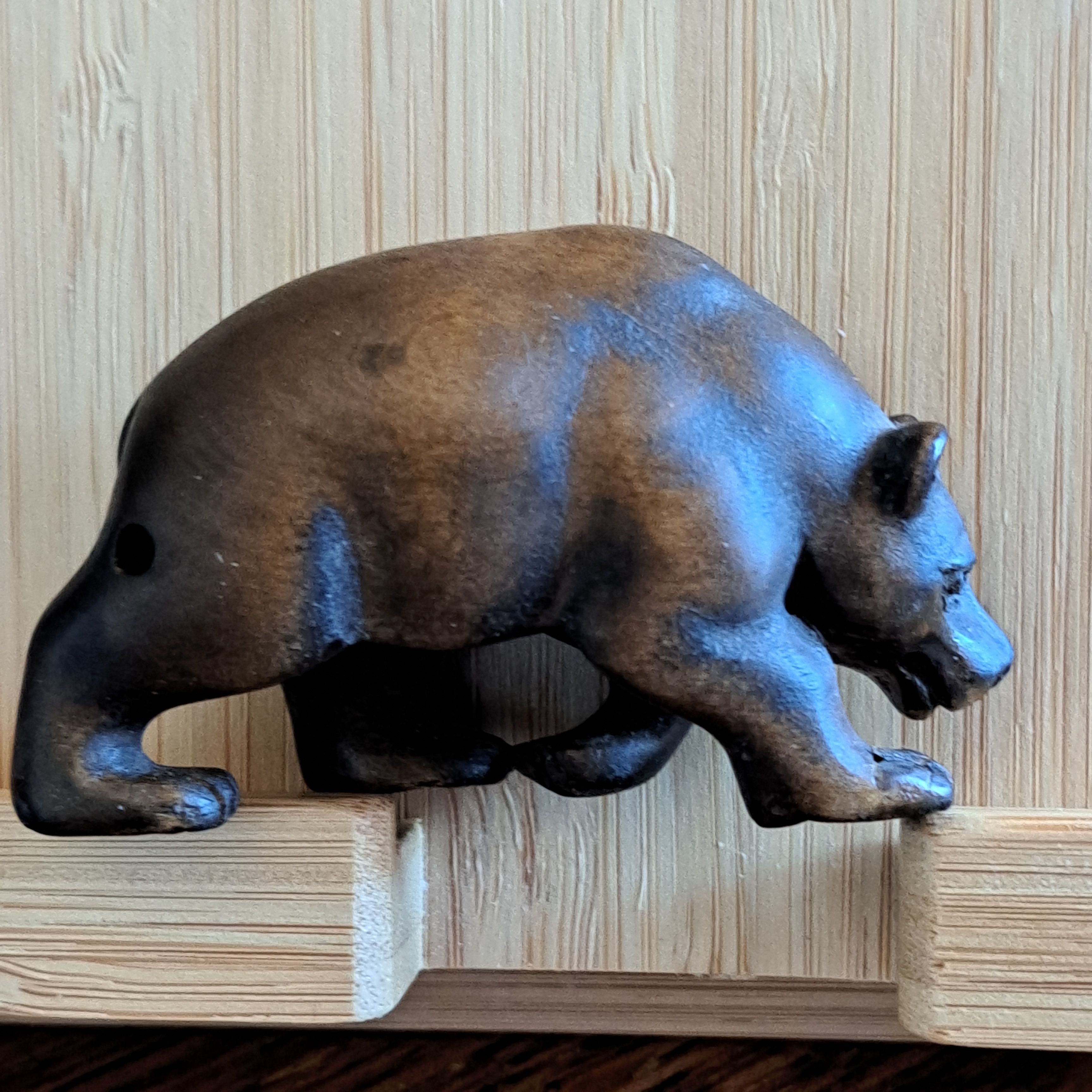
When Wendy chooses a bear-shaped button from her daughter Alice’s Cotswold Curiosity Shop and sews it onto a hand-knitted scarf, it soon becomes a vital clue in the hunt for a ruthless killer.
If you look at his tail end, you’ll see a hole that allows him to be sewn onto the scarf.
The unusual scene of the crime is a Santa Run, in which hundreds of fun-runners race dressed as Father Christmas. What’s so special about Wendy’s little wooden bear? You’ll have to read my novel to find out!
Do you have a button box in your home? What’s your most unusual button? Which is your favourite, and why?
Death at the Village Christmas Fairis now available in ebook, paperback, hardback and audiobook. The third in the Cotswold Curiosity Shop cosy mystery series, it may also be read as a standalone novel.
All three books in the series so far can be read as stand-alone novels, but it’s best to read them in order
Thanks to Sarah Chave for the photo. We didn’t let rain stop play!
I’m just recovering after a very wet and windy Hawkesbury Show, where our Hawkesbury Upton Literature Festival tent nearly blew away. I’m sure we had the most windswept spot on the showground – the wind seemed to be coming from all directions at once! However, I had great fun with fellow authors Lucienne Boyce, Sarah Siân Chave, Frances Evesham and Jack (Jackie) Chandler. All except Jackie will be speaking at the next Festival event on Saturday 27th September – and the only reason Jackie’s not coming is that she lives in Germany, otherwise she’d be there like a shot! Thanks to Sarah for the attached photo of us on the stand, dressed for the weather!
I’d just about dried out and warmed up in time to give a short talk at the traditional annual Songs of Praise service held in the Show Marquee next morning (thankfully in sunshine by Sunday morning!) At our Songs of Praise service, six local residents are invited to choose their favourite hymns and tell us why they’ve chosen them. It’s always fascinating to learn more about well-known hymns and heartwarming to learn about the personal connections for the speakers. For this service, I spoke about the power of music to unite communities and bring people to faith.
As a Lay Worship Leader, I occasionally give short talks at services. Lay Worship Leaders aren’t licensed to preach – instead we just talk about something timely or relevant for each service. I thinking of saving them up to turn them into a small book, similar to my collected columns for the Tetbury Advertiser and Hawkesbury Parish News. Let me know if that’s something you’d like to read.
A fascinating personal response to the Hafren, aka the River Severn, with something for everyone.
Following the course of the river from its source just outside Aberystwyth, Sarah Chave’s narrative Includes Welsh mythology and Welsh and English social history, as well as geography and natural history, environmentalism, and family history.
Overall it is a thoughtful, philosophical work, acknowledging and mourning the impact of industrialization and climate change, but also an effective cry for positive action going forward. While nostalgic for what we have lost, it is ultimately constructive, as evidenced by the following quote:
Pastoralism can provoke feelings of nostalgia, a yearning for an unchanging utopian idyll, but it can, instead, be a approached in a different way – as a challenge to care for and protect the wider natural world.
The author cites and embraces Rupert Reed’s argument in favour of “thrutopias” to “encourage us to live our dreams in the present where we can, change things where we cannot, and strive together towards building a more caring world for all”.
Illustrated with a route map of the river to give the reader their bearings, and gentle black and white drawings by Rachel Elinor Collis, the book also boasts an evocative, slightly dream-like cover illustration by Andy Ward. All in all it’s a slick and beautiful package, published by the University of Wales’ imprint, Calon Books, which gives it the stamp of authority.
A great gift for anyone who loves any part of the Hafren/Severn, whether Welsh or English – there’s something in there to satisfy all kinds of readers.
I downloaded this short story onto my Kindle after having a fun conversationon my Facebook author page about who we name our characters after. She named her central character Carrie after her grandmother. I’ve never yet named one of mine after my beloved grandmothers, Lily and Peggy, but I’m going to think about doing that now.
All at Sea is a gentle tale of a very English day out at the seaside – an outing that sounds as if it should be simple and fun, but in Flora McGowan’s hands, turns into a thoughtful, poignant, memorable and melancholy tale of love, loss and responsibility. I won’t say more for fear of spoiling the plot.
I love reading books set in distant countries that I’m unlikely to visit – whether the action takes place in the present day or back in time. Even better when those books have been written by authors who have spent time in those countries for added authenticity and a stronger sense of place. So I was eager to read my avid traveller friend Clare Flynn’s latest historical novel, The Star of Ceylon– which, as you’ll guess from its name, is set in the past, as are all 19 of her historical novels. (Ceylon is the old name for modern Sri Lanka.)