My Young By Name Blog

Posted in Reading, Writing

Let’s Hear It for Anne Brontë

Reading The Tenant of Wildfell Hall and Agnes Grey for the first time has promoted Anne Brontë to position of my favourite Brontë sister. It has also given me a new appreciation of Sarah Gordon’s play, Underdog: The Other Other Brontë, a gripping tale of the sisterly support and sibling rivalry between the three famous authors, Charlotte, Emily and Anne Brontë, usually lauded in that order.

Like most people, I first read Charlotte’s Jane Eyre and Emily’s Wuthering Heights for the first time at school, and wasn’t especially taken by either of them. Perhaps that why I had never gone out of my way to read Anne Brontë’s two novels before.

But I’d booked tickets to see a new production of Anne Brontë’s The Tenant of Wildfell Hall by Lucy Gough in Aberystwyth next month, and laid low with a virus that stopped me from doing anything more physically demanding than reading a book, it seemed a good idea to swot up a bit beforehand and try it.

The Tenant of Wildfell Hall
All of the Bronte sisters’ books were published under pseudonyms

I suspect this was also a silent protest against the ubiquitous hype for the new film of “Wuthering Heights”. Yes, the title includes the inverted commas as shorthand to suggest how loosely the film is based on the original. As one reviewer wrote (whose name escapes me), it’s more a kind of 50 Shades in Crinolines than a faithful portrayal of the novel. Sigh.

To my surprise and delight, I soon found myself gripped by the story-within-a-story of the mysterious new tenant of the title, begun by a neighbour who is smitten with her, before being taken up and completed by the tenant herself. It begins almost as a social comedy, a bit like the opening of Pride and Prejudice, but with the new arrival a woman instead of a man – but then turns much darker.

I won’t go in to the details of the story – I’ll leave you to discover those for yourself – but I was blown away by the compelling storytelling, the staunch feminist tone, and the frank depiction of how utterly women were constrained and controlled in Anne Brontë’s era, and ultimately by the very satisfying ending.

Anne Bronte
Sketch of Anne by Charlotte (Public domain via Wikimedia)

As with Anne Brontë’only other novel Agnes Grey, which I couldn’t resist starting as soon as I’d finished The Tenant of Wildfell Hall, the heroine is sustained by a strong Christian faith. As a Christian myself, that was fine by me, but if you’re not a practising Christian, don’t let that put you off. Such adversity might turn any woman to faith of some kind, when little else exists in their lives to sustain them.

Agnes Grey

As you probably know, all three Brontë sisters died tragically young, Anne Brontë at the age of 29. How I wish she’d lived to a ripe old age – how many other great novels she might have written then.

Although Anne Brontë’s novels were long less favoured than her sister’s – and Underdog explains why –  I’m pleased that they’ve both crept up in popularity over the years and now rank as great classics of English literature.

From the box office description of Lucy Gough’s new adaptation, I’m confident that her play will do Anne Brontë justice. I just hope that the producers of “Wuthering Heights” don’t add a film version to their to-do list.

Different Ways to Experience Anne Brontë’s The Tenant of Wildfell Hall


In Other News

Arigatao, Japan!

I’m pleased to announce that thanks to my excellent agent Ethan Ellenberg and his team, I’ve just received a Japanese translation offer for Death at the Old Curiosity Shop.  I’m always thrilled to know my books are reaching readers in languages other than the original English. They’re also available now or soon will be in German, Russian, and Italian.

Title Reveal for Cotswold Curiosity Shop #4

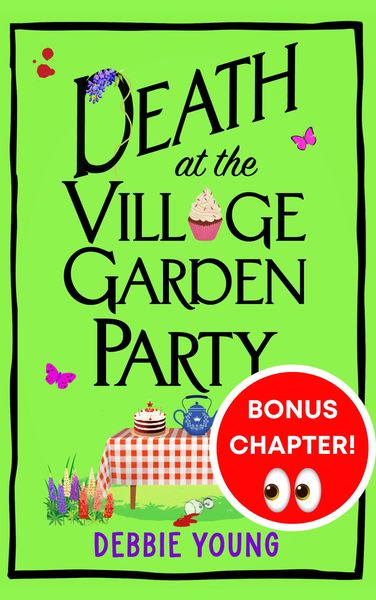
In collaboration with my editor at Boldwood Books, I’ve now confirmed the title of the fourth cosy mystery in my Cotswold Curiosity Shop series: Death at the Village Garden Party.  I do like to know the title before I start writing – and I’m now 13k words into it (out of a target of 60k, the usual length of my novels), and having great fun dreaming up a garden party that will, naturally, go horribly wrong. This book is already up for pre-order on Amazon here, and will launch on 5th July 2026.

Next Book: A New Standalone Mystery

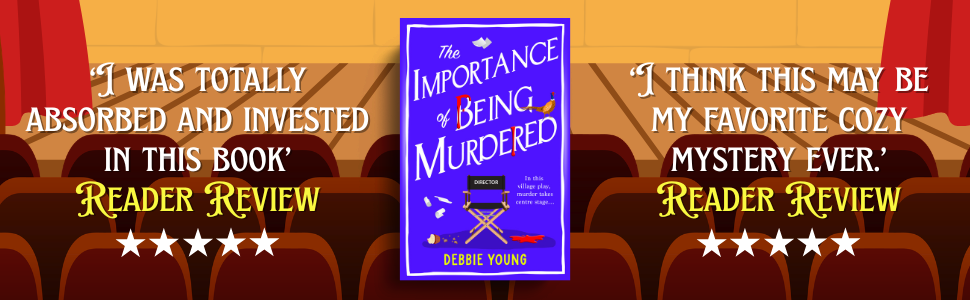
In the meantime, I’m writing a short story that will serve as an introduction to the launch of my new standalone, The Importance of Being Murdered, which will be published on 26th March. The story will be available from Boldwood Books to whet your appetite – once I’ve written it!

Posted in Events, Personal life, Reading, Writing

The Remarkable Hazards of 80s Office Life

While writing this year’s murder mystery event for the Hawkesbury Drama Group, I’ve been reminiscing about 1980s office life – the inspiration for my new play, Murder at the Office. (Tickets now on sale here.)

Back in the day, as an impressionable twenty-something fresh out of university, I assumed everything I encountered about office life to be normal practice, because I had nothing with which to compare it.

Looking back now, I realise a lot that went unremarked would cause an outcry in a 2026 business setting.

Continue reading “The Remarkable Hazards of 80s Office Life”

Posted in Reading, Writing

It’s a Wilde, Wilde Life with Oscar


“There is no sin except stupidity” is the provocative Oscar Wilde epigram I chose for my page in my high school yearbook. I’ve always loved Wilde’s way with words, so last year, when writing a murder mystery playscript about an amateur dramatic society, I set it around their rehearsals for Wilde’s comedy play, The Importance of Being Earnest. Cheekily, I named my playscript The Importance of Being Murdered, and later turned it into a novel, which will be published next month.

Continue reading “It’s a Wilde, Wilde Life with Oscar”

Posted in Events, Publishing, Reading, Writing

Why I Love Public Libraries

latest cover of Quick Change short story collection by Debbie YoungActually, there are very many reasons that I love public libraries, and I’ve written about them before on this blog. I’ve also written two short stories inspired by public libraries, published in my flash fiction collection, Quick Change. But each January, I have an extra reason to be glad they exist: the annual issue of author payment statements for books borrowed by public library members.

logos of PLR and British Library

Thanks to a scheme called Public Lending Right (PLR), in the UK, authors get paid when public library members borrow their books – something I didn’t know until I became an author myself.

Also in receipt of PLR are illustrators, translators, editors, and audiobook narrators, provided their names appear on the book’s title page. (See also Sarah McInture’s excellent #PicturesMeanBusiness campaign for recognising illustrator’s contributions to books).

What is PLR Worth?

The amount per book, currently 12.4p per loan, is shared between those who created it. Thus for a novel entirely written by a single author, the author claims 100%, but for an illustrated book, the payment will be split in appropriate  proportions between author and illustrator. Of course, that’s a lot less earned per book than if someone actually bought it – but it’s surprising how quickly the borrows mount up into a significant sum and a useful bonus.

How Authors Claim PLR

To receive PLR for a book, the author or publisher has to register their claim online, which the British Library will verify. (If you’re an author not yet registered, you can do so here: https://www.bl.uk/services/plr#registration_)

Other countries run similar schemes, but here in the UK, the British Library adminsters the distribution of PLR royalties, using £6.6m provided by the Department of Digital, Culture, Media and Sport.  That may sound like a vast sum, but there are an awful lot of books and authors who must share it. This year, my PLR share is my best ever, hurrah!

How Does the British Library Do It?

I used to wonder how on earth the British Library managed to keep track of all the borrows nationwide, but I’ve since discovered that they monitor only a representative selection of libraries. Your payment depends partly on luck: whether your books are stocked in the libraries in their sample. However, we have no way of knowing which those libraries are, and the selection changes every year.

But PLR statements do tell us how many times each of our books has been borrowed in its various formats, which is interesting to know. In 2024-2025, my most borrowed books were:

#1 Death at the Old Curiosity Shop

cover of Death at the Old Curiosity Shop


#2 Murder at the Vicarage (Sophie Sayers #2)

cover of Murder at the Vicarage


#3 Driven to Murder (Sophie Sayers #9)

cover of Driven to Murder

So if you’ve ever had any qualms that borrowing books from public libraries deprives authors of income, you can stop worrying.

The annual PLR statements make authors very happy!


In Other News

New Event at Bath Central Library (Saturday 21st February)

By coincidence, my first public event of 2026 will be at Bath Central Library, alongside a fantastic group of authors and publishers selling their books at the Local Authors and Small Publishing Fair as part of the Bath & North East Somerset (B&NES) Festival of Libaries.  Between 11am and 3pm, visitors can meet authors and publishers informally on their stands, where we’ll be selling signed copies of our books.  With tea and cake also on hand, it’ll be a relaxed and inspiring day in a creative environment. I’m really looking forward to meeting lots of readers as well as local author friends.

***Free admission***, so you can spend your money on books, tea and cake instead!

banner for BANES festival of libaries


What I’m Reading

January definitely calls for cosy reads – and so far this month I’ve picked two from my collection of British Library Crime Classics. So that’s another reason to love the British Library – they publish mysteries first published during the Golden Age of Detective Fiction between the two World Wars. Some of the novels are better than others, as you’ll see from my reviews below, but they all have stunning covers, look beautiful on the shelf, and are giving a new lease of life to many authors too long out of print.

~~~~~

Weekend at ThrackleyWeekend at Thrackley by Alan Melville

Absolutely cracking Golden Age fare, and I raced through it. Classic isolated country house set-up featuring a fun assortment of vivid characters thrown together in intriguing circumstances. I confess I guessed one of the details revealed at the end, but that didn’t diminish my enjoyment.

Poignant detail that the central character is a young man at a loose end after serving in the First World War, battle-scarred but with no employable qualifications, as so many must have been, which made me extra glad that he arrived at a happy ending in the story.

Told with a light, wry touch – although narrated in third person, includes lots of witty throwaway and judgmental comments that added to the fun. The nostalgic cover illustration, taken from a vintage travel poster, is just right.

~~~~~

ScarweatherScarweather by Anthony Rolls

Well, this was an oddity. Although endorsed by Dorothy L Sayers, it broke many of the rules that apply to the genre. I wouldn’t even term it a murder mystery, as there was very little mystery about it. The sense of place, the characterisation, and the writing style were all great – but coming to expecting a rollicking good classic mystery, I felt shortchanged. Could have been very much better, and I’m puzzled as to why the author (and the original publisher) let it go as it is. A good structural editor, with a few strategic tips and tweaks, would have made it very much more satisfying. Shame.

~~~~~

Read more about the Golden Age of Detective Fiction in this post from my blog archive:

The Golden Age of Detective Fiction