At the end of each month, I invite an author friend to join me in conversation about their latest book or other project of mutual interest. I hope this occasional series gives you interesting insights into what goes on behind the scenes in our writing world, and how authors work.
July’s guest is Alison Morton. Although we’re writing in very different genres – Alison writes contemporary and alternative history thrillers and I write cosy mystery – we share a love of penning series. What prompted today’s conversation is the recent launch of the third in her “Doubles” series of contemporary thrillers, Double Stakes.
This year, my last blog post of every month will be a conversation with one of my author friends, talking about an aspect of their writing life that I hope will interest my readers too.
Meet my friend Alison Morton!
This month, thriller writer Alison Morton is my guest. Alison and I have had parallel careers as novelists, with us each writing two series, all falling under the broad heading of crime fiction. But whereas mine is lighthearted cozy mystery set in the comfy Cotswolds, Alison’s is serious stuff, pan-European thrillers, one series of modern stories, and the other alternative history.
I’m always interested in what Alison’s up to, but the reason I’ve invited her onto my blog today is that she is celebrating the launch of her eleventh Roma Nova book: Exsilium.
But where’s Roma Nova? I hear you cry!
Alison, if Roma Nova were a real country, how would its Wikipedia entry read?
Alison:
Roma Nova (ˈrɒmə ˈnəʊvə), officially Colonia Apuliensis Roma Nova is a landlocked Latin-speaking country located in the Eastern European Alps. It borders New Austria and Italy. Roma Nova is a semi-constitutional monarchy headed by an imperatrix who rules in association with an appointed Senate and an elected People’s Assembly.
With an area of 2,950 square kilometers (1140 sq mi), it supports a population of 1.5 million (2019). Economically, Roma Nova has one of the highest gross domestic products per capita in the world based on mining and processing minerals, especially silver, powerful technology and engineering sectors, financial services and specialist agricultural exploitation. It maintains military national service and a unique matrilineal social structure. It belongs to the European Economic Area and the United Nations and often acts as an intermediary between nations.
Alison enjoying a visit to Virunum, the real-life location for her fictitious Roma Nova
Alison:You might also like to read this tourist guide to Roman Nova, written by a certain Claudia Dixit, which I’ve shard on my blog here:
Debbie: That’s great fun, thank you! Now, speaking as someone who has written two series of novels in chronological order – the first seven Sophie Sayers books run the course of a village year from one summer to the next, and the Gemma Lamb series, when complete, will cover an academic year, with two books per term – I am intrigued by the more complex order in which you wrote your books. Please enlighten us!
Alison: this chart gives a clear picture of when each book was published, when it was set, and where it falls in the chronological order of the series.
Title and date published
Time story set
Chronological order
INCEPTIO – March, 2013
Approx 2010
7
PERFIDITAS – October 2013
2016
9
SUCCESSIO – May 2014
2023/4
10
AURELIA – May 2015
1968/9
3
INSURRECTIO – April 2016
1984/5
5
RETALIO – April 2017
1986/7
6
CARINA (novella) – November 2017
2013
8
ROMA NOVA EXTRA (stories) – October 2018
AD370-2029
Mixed
NEXUS (novella) – September 2019
Mid 1970s
4
JULIA PRIMA – August 2022
AD 370
1
EXSILIUM – February 2024
AD 383-395
2
And here are the covers in all their glory!
The complete works of Alison Morton, across both her series of thrillers
Debbie:How did you come to write the Roma Nova novels in this order? Was it a process that evolved or did you plan it this way from the start?
Alison: Totally chaotic and unplanned! In late 2009, I set out to write a book to express ideas I’d had bubbling in my head for decades – Romans, woman hero, military, thrilling story with a dollop of romance. That was Inceptio. Before it was even polished up and when I was ignorant of the publishing and book world, I had written the manuscript of Perfiditas. The characters were starting to push me to write the ‘what happened next?’’ story so I wrote Successio, which brought in the next generation. I thought that was it. Trilogy done.
Then Aurelia, the elder stateswoman mentor of Carina, the heroine of my trilogy, started nagging me, so I had to write her story, Aurelia. But what had she done in the Great Rebellion the other characters kept going on about? What were the secrets of her younger self? So I went back to 1968 and the series time anomaly opened…
I ended up writing about the Great Rebellion in Insurrectio and the resolution in Retalio. Right, that was it! No more.
Then every one of my writer friends started writing novellas.
Debbie:Guilty! I confess!
Alison: I had a nagging feeling there were gaps in my trilogies when we knew nothing of the lives the Roma Novans were living between the books. Why didn’t I have a go at some short fiction for a change?
Carinain 2017 filled in a gap between Inceptio and Perfiditas and highlighted the conflict of duty, love and loyalty and Nexusin 2018 filled the fourteen-year gap between Aurelia and Insurrectio and set up a few things for Retalio. Both were short at 38,000 words.
In between, I put together eight short stories that really blasted the time continuum apart, varying between AD370 to 2029 in the future!
Why did I go back into the deep past of the late fourth century with Julia Prima and now Exsilium? Because the fans kept on asking me. And it was fun to write straight historical fiction.
Debbie: With the publication of Exsilium, do you now recommend readers new to your series start with that book, or is it better to read them in the order you wrote them? I know they all work as standalone novels too.
Alison:It doesn’t really matter. I’ve woven in references between all the books, so those reading from start to finish of the will enjoy little ‘Easter eggs’ (and possibly go, ‘Aha!’) when they see the connections. Perhaps the four Carina books set in the present – Inceptio, Carina, Perfiditas, and Successio – could be read in succession as could the 1960s/80s group of Aurelia, Nexus, Insurrectio, and Retalio. Historical fiction fans might like to start with Julia Primaand Exsilium.
Debbie:With my novels, I’ve had my sights set on the very specific genre of cozy mystery all along, although there are strong romantic and comic elements too. By contrast, the Roma Nova novels bend and blend genres. Some are purely historical novels, and others are alternative history (or alternate history, as our American friends term it) – although of course all ‘althist’ must at least be founded on historical fact. What are the challenges of mixing up the genres within a single series?
Alison: This goes back to what we discussed earlier – chaos! I had no idea that the standard approach was writing in a set genre. I just wanted to write my story.
It dawned on me later that that the book world, especially marketing and selling, ran on strict structural lines. So it’s been a very difficult marketing road.
But once people read one in the series, they very often go on to buy all the others and I’ve had some very heart-warming emails and letters from readers expressing their love for Roma Nova.
That I’ve touched people, and sometimes inspired them, works for me.
Debbie: Sometimes, to both readers and writers, it can feel as if a series has gone on too long. The best writing advice I’ve heard on that score is from our mutual friend, Orna Ross, who told me, “One must be careful not to keep writing the same book over again”, and every time I plot a new addition to my series, I bear that advice in mind. You’ve obviously found a very good way of keeping each novel fresh by changing the timeframe. What other advice would you offer to aspiring authors planning to write series?
Alison: I say this with no irony – plan! I don’t mean a hard and fast structure for your series, but work out a setting/book world that can absorb a lot of different stories.
The second thing is not to write one book, then go slightly more outrageous in the next one, and by Book 10, you’re over the limits of probability and into space cowboys.
Thirdly, interlink the books in some way apart from ‘what happened next’.
Lastly, NEVER finish one book in a series with a cliff-hanger.
Debbie: The Roma Nova novels span many centuries, taking us up to the present day. Would you ever consider writing a speculative futuristic take on Roma Nova? Any thoughts on how that might pan out?
Alison:I wandered a few years into the future in ‘Allegra – An Unusual Love Story’, one of the short stories in the Roma Nova Extra collection and quite enjoyed that, so something to think about. In the future, of course.
Debbie:Anchored firmly in the present is your contemporary Mélisende pan-European thriller series, which currently stands at two books, Double Identityand Double Pursuit. Are you tempted to write a prequel for Mélisende that would take us back in time in that series too?
Ah! I have. ‘The Sand Beneath Her Feet’ is a short story exclusively available as part of a thank-you ebook for signing up to my newsletter. It tells of Mel’s last mission before leaving the French Army. Like many a thriller, it all blows up in her face.
Debbie: It seems every time I publish the latest in one of my series, readers ask when the next is due out, but at the request of my publisher Boldwood Books, my current work-in-progress is a new trilogy. It’s still cozy mystery set in the Cotswolds, but all-new in every other respect, but there will be more stories about Sophie and Gemma too. So, now that EXSILIUM is out in the world, what’s next for you? More in either of your series, or do you have any plans to branch out? If your readers will let you, that is!
Alison: I’ve started the first chapter of the Mélisende ‘Doubles’ series and I’m longing to see what she’s going to make of it. However, I have a feeling my Roma Nova readers won’t let it go that easily…
Debbie: Where can readers find out more about you and your books?
Alison: The best starting point is my World of Thrillers site: https://alison-morton.com, where you’ll also find links to my social media accounts and my writing blog, as well as more information about my new book, Exsilium.
Now available in ebook and paperback – click image to choose your preferred retailer
Round about World Book Day, I discovered my author friend Alison Morton was about to launch a special tenth-anniversary hardback edition of her debut novel Inceptio, inspired by her love of ancient Rome, and previously published in paperback, ebook and audiobook.
That got me thinking about what formats Ancient Romans used to read – books? scrolls? tablets? (the wax type, not the digital ones). Intrigued, I asked Roman expert Alison to enlighten me, and this post is the result.
In my last blog post of each month, I interview an author friend on a fun topic that’s currently caught my imagination.
Take a spin in a much-loved Mini with Alison Morton
At the moment my topic is anecdotes about their Mini cars, in honour of the magical Mini that features in my recent novella Mrs Morris Changes Lanes. This month’s guest is Alison Morton, author of Anglo-French thrillers and the Roma Nova historical novels.
I imagine the heroine of Alison’s new series of Anglo-French contemporary thrillers, Melisande des Pittones might be comfortable in the driving seat of a modern Mini, especially if it was a souped-up version!
Hello, Alison, and welcome back to my blog. I think you’ve owned more Minis than anyone I know!
Yes, I’ve owned seven Minis – four originals, one ‘supermini’ and two new BMW ones. My first was Little Grey Min in 69 when I learnt to drive and my second (new!) was a purple Mini.
It looks as if Alison has changed far less than the Mini since 1976!
How much did it cost and how much did you sell it for?
Little Grey Min cost my mother £350. It was a beautiful car that had had ‘one careful lady owner’ for two years. The family friend who owned the dealership had sold it to her originally and knew the car.
Purple Min was brand new and cost £995! I bought it when I started work in the City of London. Yes, it was s possible to drive and park a car in London in the 1970s.
How long did you keep them and why did you sell them?
This is all a bit fuzzy, but when I wanted to upgrade. People did in those days, usually every two years. I had a red Mini Cooper at one stage and then ended up with a yellow ochre 1275 GT. That could really move. It had what we called ‘wellie.’ I think it was quite expensive, even though I bought it second hand.
I replaced the 1275 GT with a new red MG Metro – a ‘supermini’. That was a lovely car with a lot of flashy bits and pieces (It was sold as a sports model; 0–60 mph in 10.9 seconds, top speed 103 mph) but very comfortable.
Then I got married and a year later, all the paraphernalia of baby equipment became a challenge… There was an interlude with sensible cars such as Maestros, Allegros and Rovers.
Then BMW revived the Mini brand. Not the same, but lots of nostalgic features.
Yes, I queued up with all the other baby boomers with a printout from the online design tool on the first day that ordering opened in the local dealership.
My first new one in March 2002 was British Racing Green with a white roof (swoons at the memory), then a few years later a dark metallic blue one again with a white roof.
Please describe it in as much detail as you can remember.
Little Grey Min had dark red seats, sliding windows that stuck in the damp, a cable hanging in the door to open it and a floor button starter. It was my beloved first car, but it did need watching for rust.
The BMW Minis were at the other end of the scale, as the photo shows!
Alison’s most recent Mini in 2007
Many Mini drivers seemed to feel compelled to name their Minis, as if they have a personality of their own. Do they have a personality of their own? What was yours called?
They ALL had personalities, but I unimaginatively called them by colour plus Min.
What is it about Minis that makes most owners feel so attached to them?
They are cute, cuddly, easy to park, cheekily different and FUN. Also quite trendy…
What did you most love about your Mini? What drove you nuts about it?
Rust.
Where did your longest journey in your Mini take you?
Little Grey Min went with me to Leeds then France and Germany and finally back to Leeds when I was a student. Purple Min went to the South of France with a couple of friends. The others went on several trips to the north of England.
What was your most exciting trip?
After I passed my driving test in Little Grey Min in 1970, I collected my mother from the test centre where she’d been waiting and dropped her off home. Then I had to drive back to school through the middle of Tunbridge Wells at lunchtime BY MYSELF!
What most surprised you about your Mini?
That I was allowed to have such a wonderful car!
Did you ever have any accidents or any scary trips in your Mini?
Winter in Germany in minus 20C was ‘interesting’. Poor Little Grey Min had to wear snow chains for a few weeks. Boy, did they clank!
Accidents? Some fool bashed into the back of Little Grey Min when I was waiting at a roundabout. He was drunk. I had terrible whiplash later, but at the time, I jumped out of the car, stared at the huge dent in the boot door and burst into tears. Then I swore at the drunk driver, but his car was a worse mess.
Who was your favourite/most interesting/most difficult passenger and why?
The test examiner. No further explanation needed.
What car do you drive now?
I am a Mini person through and through, and I’d buy an electric Mini tomorrow, but it would be a vanity at 35,000€.
I share a VW Touran with my husband. We really don’t need a car each now we both work from home. But it’s very big (and a little bit dull…)
What do you miss about your Mini?
The fun, the cheekiness of it. The French have a lovely word for it – espièglerie.
In Mrs Morris Changes Lanes, what did you think of Mrs Morris’s Mini and of her adventure?
Ha! Minis always open up opportunities and alternatives. The adventure was before you and, of course, you had the wonderful Mini on your side. Go, Mrs Morris!
Mrs Morris Changes Lanes is available in paperback and ebook for Kindle – click the image to buy it from Amazon, or ask your local bookshop to order in the paperback for you
All About Alison Morton
Alison Morton writes award-winning thrillers featuring tough but compassionate heroines. Her nine-book Roma Nova series is set in an imaginary European country where a remnant of the ancient Roman Empire has survived into the twenty-first century and is ruled by women who face conspiracy, revolution and heartache but with a sharp line in dialogue.
She blends her deep love of France with six years’ military service and a life of reading crime, historical and thriller fiction. On the way, she collected a BA in modern languages and an MA in history. Alison now lives in Poitou in France, the home of the heroine of her latest two novels, Double Identity and Double Pursuit. Oh, and she’s writing the next Roma Nova story.
Read Alison’s latest thriller, Double Pursuit, the sequel to Double Identity.
One dead body, two badly injured operatives and five crates of hijacked rifles.
In Rome, former French special forces intelligence analyst Mélisende des Pittones is frustrated by obnoxious local cops and ruthless thugs. Despite the backing of the powerful European Investigation and Regulation Service, her case is going nowhere. Then an unknown woman tries to blow her head off.
As Mel and fellow investigator Jeff McCracken attempt to get a grip on the criminal network as well as on their own unpredictable relationship, all roads point to the place she dreads – the arid and remote African Sahel – where she was once betrayed and nearly died. Can Mel conquer her fear as she races to smash the network and save her colleague’s life?
A post about how I choose launch dates for my novels plus a quick survey of other authors’ preferences
While I don’t consider myself to be superstitious, I’ve got into the habit of publishing each new book on a date that is personally significant to me.
Choice of publishing date is a luxury that only independent authors can enjoy:
We call the shots ourselves, rather than being dependent on the huge engines of trade publishing companies, which typically take a year or more to launch a book from the date the author delivers the final manuscript.
My first novel, Best Murder in Show, was launched on 1st April, 2017 – not because I was staging it as a practical joke for April Fool’s Day, but because it happens to be the birthday of my good friend and mentor, Orna Ross, author, poet, and founder of the Alliance of Independent Authors, for which I’m the UK Ambassador.
Having fun with Orna Ross and Katie Fforde at the first Hawkesbury Upton Literature Festival in 2015 (Photo by Clint Randall)
For my most recent novel, Murder Lost and Found, I chose my daughter Laura’s 18th birthday. Not only was it of course Laura’s majority, but the novel marked a kind of coming of age for Sophie Sayers too, marking the end of her first year in her adopted village of Wendlebury Barrow and a new confidence and assurance for Sophie that has been developing throughout the series.
However, Murder Lost and Foundwon’t be the last you will hear of Sophie Sayers: I’m planning an eighth adventure for her, A Fling with Murder, for next year, and further spin-offs in my Tales from Wendlebury Barrow series of novelettes.
Which Dates Do Other Indie Authors Choose?
Being able to publish on dates that are important to me gives me great satisfaction – the icing on the cake of completing a project – but I wondered whether this habit was just personal whimsy or common practice. When I asked some author friends, I was gratified to find I’m not alone in my approach, as these examples show:
Historical novelist Clare Flynn, on her latest novel, Sisters at War, set in Liverpool during the Second World War:
“I chose May 1st 2021 to launch Sisters at War as it was the 80th anniversary of the terrible May Blitz on Liverpool in 1941.”
Alison Morton, who writes alternative history and thrillers, decided to make her Roma Nova short story collection a gift to herself:
“This was the first time I’d dared to put together a collection of short stories, so I thought it would be fun to give birth to it on my own birthday on 19th October. The stories supplement, precede or follow the stories in the core Roma Nova novels – little episodes of their own. It was delightful to wake up to a mix of “Happy publication day” and “Happy birthday” greetings. I drank bubbly that evening in double celebration.”
Other author friends have published to honour family members – for example, Pauline Baird Joneswill launch Cosmic Boom on her late mother’s birthday, 20th July, and Kristina Adams published her non-fiction book, Writing Myths, on her grandmother’s birthday the year she passed away.
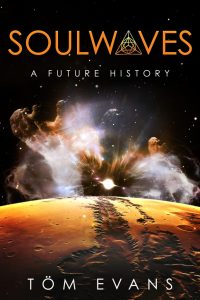
Tom Evans has a very appropriate strategy for Soulwaves : A Future History and Soulwaves: Insertions, both of which feature the Moon almost as a character:
“I published on the first new moon of the year, this year and last, and then followed up with snippets of ancillary, augmenting content every subsequent new and full moon. My choice of date may have no significance, but it keeps me aiming at something – with a reminder in the sky when not cloudy!”
Amie McCracken had a very specific reason for fixing the launch date for her latest novella, which is set in the USA and Mexico:
“I chose the Day of the Dead for Leaning Into the Abyss because it features as the day my protagonist finally figures out her life! (And it’s a story about grieving for a lost loved one.)”
Mark Haydenhad a more pragmatic approach for the ninth in his King’s Watch fantasy series:
“Some indie authors are a lot more casual about publication. I adhere to the belief that the best day to publish a book is yesterday, and I put them out as soon as they’re ready. However, even I admit that I rushed out the ebook of Five Leaf Clover a good week ahead of the paperback because the UK bank holiday weekend was coming up and I wanted to give my readers an incentive to buy it. I also admit that my wife did once tell me that under no circumstances could I publish a book on her birthday. I know my priorities.”
Which Book Will I Publish Next?
So when will I be publishing my next book and what will it be?
Mrs Morris Changes Lanes, a new standalone novella – fingers crossed for 1st August (my maternal grandmother’s birthday)
Scandal at St Bride’s, the third St Bride’s School novel – before the end of the 2021 (exact date yet to be decided)
I’m also writing May Sayers Comes Home, a novella about Sophie Sayers’ aunt; a travel memoir,Travels with my Camper Van, and planning new additions to the Tales from Wendlebury Barrowseries of novelettes.
So I’d better get off my blog now and get writing!




 One dead body, two badly injured operatives and five crates of hijacked rifles.


 Historical novelist
 Amie McCracken
