Posted in Family, Personal life

The Wasp and Goliath

Thanks to the copious sunshine and rain this summer, our annual glut of tree fruit arrives early in our garden. Soon we’re in a race against time to pick up the windfalls before they start to rot.

One afternoon in August, I’m so intent on my task beneath a plum tree that I don’t notice a wasp lurking in the grass until I have knelt on it and it has stung me. Pesky wasps, I think, retreating indoors to treat my throbbing knee.

Remembering my grandmother’s mantra, “Bicarbonate for bees and winegar for wasps”, I head for the larder.

Only after applying a splash of Sarson’s does it occur to me that medical knowledge has moved on since my grandmother’s day, so I grab my phone to search for more modern remedies. Before I can raid the bathroom cabinet for the recommended antihistamine tablets and cream, I fall down a Google rabbit-hole, looking up the difference between wasps and bees.

I’m wondering why we feel so contemptuous for wasps, when spotting bees in the garden feels like a celebration. Both can sting us. Is it only because wasps don’t make honey or beeswax that we can divert for human use?

What’s the Use of Wasps?

If so, that’s a short-sighted attitude, because it turns out wasps have a very important role in nature.  The BBC website tells me:

  • wasps kill pests that prey on crops
  • wasps are the farmer’s friend and the gardener’s ally, protecting our produce and helping us to maintain yields
  • they also eat insects that spread human disease

How very helpful of them.

Lyn’s Ladybirds

I knew ladybirds eat greenfly, because my late friend Lyn, an early proponent of organic gardening, used to collect ladybirds in matchboxes and release them into her greenhouse in place of chemical insecticides.

Apparently, wasps are sometimes used the same way in agriculture, presumably without the matchboxes.

For a moment I picture swarms of wasps stinging predatory pests to death like a miniature militarised attack force, leaving a battlefield full of tiny dead bodies in their wake. Then I discover wasps eat their victims or take them home for their young. Unlike bees, they are carnivorous. Wasps are also the evolutionary forerunner to bees.

“Bees are wasps who have forgotten how to hunt,” says Professor Seirian Sumner of University Collect London. Bees have had other things on their minds, such as developing wax-making glands that wasps lack. (See this Guardian article for more details.)

The Jobsworth Wasp

Thus the wasp that stung my knee was only doing its job of protecting the plum crop. To the wasp, I was a giant crop-destroying predator, and its duty was to repel me. Like David’s slingshot and stone that felled Goliath, the wasp’s sting was highly effective: I instantly fled the scene and left the plums alone.

In future I’ll be more respectful of this tiny breed of busybodies and let them get on with their pest patrol.

After all, there are plenty of plums for us all. 

photo of basket of plums offered free on my front wall
A permanent feature on my front wall during this year’s plum season: free plums for passers-by. The reason there is a catfood box in the basket is because by this point we had run out of punnets to put plums in and were having to improvise with any container that came to hand.

This article was originally written for the September issue of the Tetbury Advertiser,
holder of the Queen’s Award for Voluntary Service


TO READ MORE ARTICLES LIKE THIS
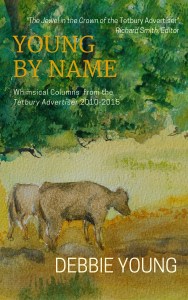
cover of Young by Name
The first volume covered 2010-2015.
The second volume includes 2016-2020

If you enjoy reading my columns from the Tetbury Advertiser, you might like to know that I’ve published two collections of them, now available in ebook and paperback. The cover images are details from my father’s watercolour painting of a Cotswold field.

Order the ebooks here:

Young by Name
Still Young by Name

Order the paperbacks here:

Young by Name
Still Young By Name

Or ask your local bookshop to order your copy in-store.

Posted in Personal life

“And A Marrow!”

In this month’s issue of the Hawkesbury Parish News, I’m talking about late summer gluts in the garden. The copy deadline is half way through the previous month to the cover date, and a month after writing this article, we’ve only just finished dealing with our surplus fruit, but still the lanes round here are dotted with baskets of free apples, squash, and other produce for sale or for free at the garden gate.

close-up photo of apples on tree
One of several apple varieties in our garden

Before I moved to Hawkesbury Upton, I couldn’t understand how people could leave windfall fruit to rot. My previous house, in Tring, Hertfordshire, was a tiny two-up, two-down Victorian terrace with a back yard rather than a garden, so growing fruit and vegetables was out of the question. So when a neighbour encouraged us to strip her crab apple tree of all its fruit for our new hobby of winemaking, we were overwhelmed by her generosity. Only now that my kitchen is full of baskets of windfall apples – plus a bucket containing 27 pints of fresh apple juice – can I empathise with her relief at offloading her surplus to a grateful home.

When we moved here from Tring, the garden was one of the biggest attractions of our new house. Its substantial lawn was edged with mature plum trees, and an apple tree divided the lawn from the kitchen garden, where soft fruit bushes flourished. Over the years, we’ve added crab-apple, pear and more apple varieties, and damson and cherry trees have planted themselves. (Thank you, wild birds!)

Our plum trees have also multiplied, due to our habit of picking a ripe plum to eat on the move before chucking the stone on the ground wherever we happen to be. One summer, I anticipated a fairy ring of plum trees springing up where my aunt had sat in the garden, working  her way through a dish of plums and leaving a circle of their stones around her chair.

row of seven flagons of cider fermenting
One way of coping with a glut of apples: cider!

This year we’ve had our largest yield of plums yet.

In the year of the Covid-19 pandemic, it’s good to have a reminder that nature can also be benevolent – so much so that it’s been hard work even to give away our surplus.

There’s only so much jam one can use. When I put my latest jars of plum jam in the larder, I discovered we still had four jars from last year.

At least our plums are delicious, unlike the marrows that Nick Cragg throws in with every lot at the Show Day auction. His cry of “And a marrow!” always raises a laugh.

But in the absence of this year’s Village Show, what are we going to do with all our marrows? At the 2021 Show, I predict record entry levels in the spirits category.

Anyone for marrow rum?


image of square version of Best Murder in Show cover, ready for new audiobook
Now available as an audiobook as well as in paperback and ebook

If you like the idea of the Village Show, you might enjoy my novel Best Murder in Show, the first in my lighthearted Sophie Sayers Village Mysteries series. Available in paperback, ebook and audiobook, it’s a cheery read to help you eke out the summer for a little longer. 

Buy from online retailers here.

The paperback is also available at Hawkesbury Stores and to order from all good local bookshops.