
Posted in Travel

The Ceremony of the (Bubble) Bath – Ancient and Modern

Illustration of chamber pot being emptied into medieval streetTo my mind, the best way for a History teacher to grab the children’s attention in a lesson is to tell them something memorably gross.  

If you “did” the Middle Ages in a British school, you will certainly remember learning about the medieval concept of emptying a chamber pot out of an upper floor window, with a cry of  “gardy-loo”. It’s corrupt old French for “look out for the water!” – a euphemism if ever there was one. The use of molten tar to stop an amputated limb from bleeding (talk about a sledgehammer to crack a nut!)  went down well in my Year 7 History class. Miss Edwards was not pleased that we kept going up to ask her about it individually, all wanting to hear the horrible description from her own lips for ourselves.

Need a great fact about the ancient Egyptians? Mummification techniques are always a good starting point: e.g. pulling the brain out through the nose with a gadget  resembling a crochet hook.  (There’s some cross-over for needlework lessons there, too.)

Studying the ancient Romans is always good for a few cries of “Ewww, miss!” with their unendearing habit of eating dormice (how much meat can there be on a dormouse?), as is scraping the previously oiled dirt off a bather’s skin with a tool called a stygil. Would this practice really make a person cleaner rather than dirtier? we wondered. The idea made my class very glad to go home to our suburban baths with our bottles of Matey bubbles.

Roman Baths Aquae Sulis   9

Although my own  school education has itself receded into ancient history, those lessons  “doing” the Romans come back to me vividly on a visit to the wonderful Roman Baths Museum in the ancient city of Bath. In the cool, dark room alongside the series of small plunge pools, I stand reading a notice on the wall: the procedure for taking an ancient Roman-style bath. You disrobe and step into a series of successively hotter baths, before the old oil massage/stygil service is provided by an obliging slave. The final rinse and shine is provided by an optional leap into a cold plunge pool (eek!) To me, it reads like a refresher course: I’ve never forgotten that old school history lesson.

Dozens of overeas tourists pass this notice by unread, but with their audioguide at their ear, they hear the litany of the bath repeated in French, German, Japanese, Dutch.   No-one speaks: the museum is too awesome and this dim and shady atmosphere acts as a further damper on conversation. Unusually, the Roman Baths were also a temple, and the reverential atmosphere of a holy place still hangs over the gently steaming green waters. There’s also a sense of intruding on people’s privacy: images of “real” living Romans going about their bath ritual are projected onto the ancient walls of the place. More than once, I see one out of the corner of my eye and believe a real person is about to plunge into the pools.

Bottle of Matey Bubble Bath (modern packaging)And then I’m struck with a sense of the bizarre. What would the average bathing Roman think if he could see the multi-million,  high-technology tourist attraction that his daily bath venue has now become? I try to think of an equivalent that might remain from 21st century life a thousand years down the line. Certainly not the single, small bath of modern times, generally taken alone. It simply does not measure up, even for the biggest bath addict who plans their ablutions with military precision: entering the bathroom armed with a book to prop up on the bath rack, perfumed bubble bath, scented candle, glass of wine and bar of chocolate. (Or is that just me?) There’s nothing in there to gladden the heart of 22nd century children, no gross rituals to send a ripple of excitement around the History classroom.

Nor is it the socially unifying force of the ancient Romans. The closest thing we have to the Roman Bath House is probably the modern gym. Will the modern obsession for joining a gym in pursuit of physical fitness stand the test of time? (It’s never worked for me, even now.) I suppose it could make an interesting tour:

  • visit the self-torture machines and try to detect what each one is for
  • try to work out why so many people joined the gym each January and never went in other months of the year
  • list gym etiquette tips, such as bringing your own small towel to wipe your sweat off each piece of equipment after use (ok, so that one is slightly gross)
A head of Minerva found in ruins of Roman bath...
The goddess Minerva, found in ruins of Roman baths in Bath, England. (Photo credit: Wikipedia)

The lost property book would make no less interesting reading that the tiny scraps of lead that have been fished out of the spring in Bath. These listed the items stolen from people while they bathed and were sued to solicit vengeful curses from the goddess Minerva. This makes for an endearing display, reminding us that these ancient Roman bathers were ordinary people, just like us.

Another interesting exhibit would be the curious snacks and drinks containers obtained from vending machines – and a collection of coins and coin-like tokens found stuck inside them. I can hear the future’s children now: “Did they really drink that bright blue stuff? Did Powerade give them superpowers?”

But sadly there’s nothing there to truly compete with the allure of the ancient Roman baths. I say, bring back the stygil!

If you enjoyed this post, you might like the previous one inspired by the same visit:

New Beginnings and Old Friends in Ancient Cities

Posted in Family, Travel

New Beginnings and Old Friends in Ancient Cities

The Roman Baths and Bath Abbey (photo: Wikipedia)

Although Bath is known for its elegant architecture and very smart shops, I am surprised to spot quite so many beautifully dressed people walking down Milsom Street on Wednesday as I head for the Roman Baths with my young American visitor in tow.

It’s just an ordinary weekday afternoon, but half the population appears to be on its way to a wedding. And not just any old English wedding. There are some exotic costumes in evidence, such as jewel-bright saris, with gold trimming glinting in the unexpected afternoon sun.

Then a beaming  young lady walks past me wearing a mortarboard and academic gown, and the penny drops. It’s Degree Day. As we descend down Union Street, we see more soon-to-be-graduates, flanked by proud parents, ebbing down towards the Abbey. I’m glad for them that the sun is shining: it’s an auspicious start to the next stage in their lives.

Behind their broad smiles, the gowned ones look a little nervous.  I know how they are feeling: recognising the end of a relatively carefree era and apprehensive about what the future might hold. I recall sitting in the back of the white van in which my brother collected me and three years’ worth of accumulated belongings. As we pulled away, I watched the porter’s lodge recede behind us. I was reluctant to turn round and face the way we were going: I did not want to acknowledge that university and York were now just a part of my past.

Bath university academics enter the AbbeyA little later on this sunny Wednesday in Bath, we’re emerging from the Pump Rooms after a fascinating tour of the Roman Baths. As we step out on to the pavement, a policeman extends his arm to halt our progress. And so we just avoid bowling into a procession of Bath’s brainiest and best in all their academic finery – presumably the Chancellor, Vice-Chancellor, Dean and senior dons in full formal regalia. It’s a brilliant-hued collection of medieval robes and caps, all velvet, brocade and long feathers. The big double doors of Bath Abbey are flung open in front of them, and they being to process inside to confer degrees.

As we watch their slow progress, I’m taken right back to another such ceremony which I chanced across in Oxford exactly 23 years ago. By coincidence,  I was  showing round another American girl that day – my old schoolfriend Cindy. We had been at an international school in Germany before returning to our home countries. I don’t remember how Cindy came to be in the UK, but she was, and she had a  day to spare, so I blagged a day off work to take full advantage.

Procession of Oxford dons in formal academic dressAt that time I was living in Tring, Hertfordshire, but even so we headed for the Cotswolds, always my spiritual home, and broke the journey at Oxford. Strolling through that ancient city, we turned a corner and almost bumped into a long, double line of colourfully dressed academics. It was a vision  as sumptuous and historic as the display I’ve just witnessed in Bath (though this being Oxford, they’d probably have considered that academically they pulled rank). We even spotted  some famous faces – I think Magnus Magnusson might have been one of them.

I can be precise about the date because it was just a month before my first marriage. I  told Cindy all about the plans for our big day. We developed a running joke about the inequality of our match, because whereas I had acquired a new dress, bag and shoes for the day, my future husband was economising. He’d recently bought two new suits to start a new job in Bristol, and he was to wear one of those. All that he needed was a button to replace one that had fallen off. So whereas I got a whole new outfit, all he would be gaining was a button. This thought sent us into paroxysms of mirth for the rest of the day. It probably accounts for our broad grins in the photos we took of each other in front of various Cotswold landmarks. (Unfortunately I can’t find them to publish them here.)  Cindy was yet to meet her match, but our lives were full of promise. I think she may have been about to start a new course at university.  It wasn’t just the Oxford graduates who were heading towards a new beginning that day.

The author graduating from her American-style high school in 1978
Speaking at my high school graduation in Germany

Since that lovely sunny day, Cindy and I haven’t knowingly been on the same side of the Atlantic. She’s now settled in Florida, I’m in the Cotswolds. We’re over our new beginnings; you might say we’re  somewhat advanced in our middles. We’re each married with a beautiful daughter who lights up our lives.  (By chance, my current American guest is the daughter of a treasured mutual friend from the international school). We’ve done ok. And I’m sure that if we met up again tomorrow, that button would still make us laugh.

Congratulations to all those who are graduating this month, and may the sun continue to shine on your new beginnings. 

Posted in Travel

Wye I Run: 4 Miles Along the River Bank

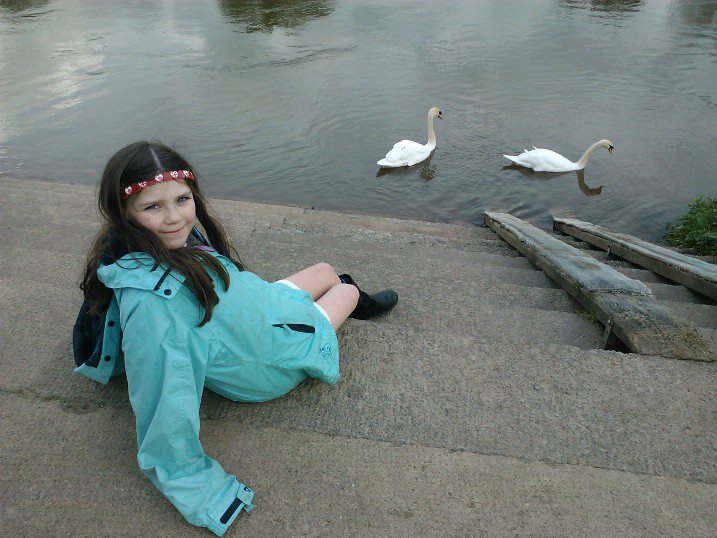
My daughter and two swans on the WyeThe first sunny Sunday for weeks finds me on an action replay of one of my favourite runs, along the banks of the River Wye. We’re in Monmouth, Wales, for the Bank Holiday weekend and the sun is out in full force to remind us that it’s Spring. I don my running kit and before stepping out along the riverbank path, I retrieve my phone from my daughter, who has been snapping a pair of extrovert ducks from every angle. They are very obliging models, realising that she is the same little girl who earlier dispensed half a loaf of Hobb’s House finest sliced amongst them.

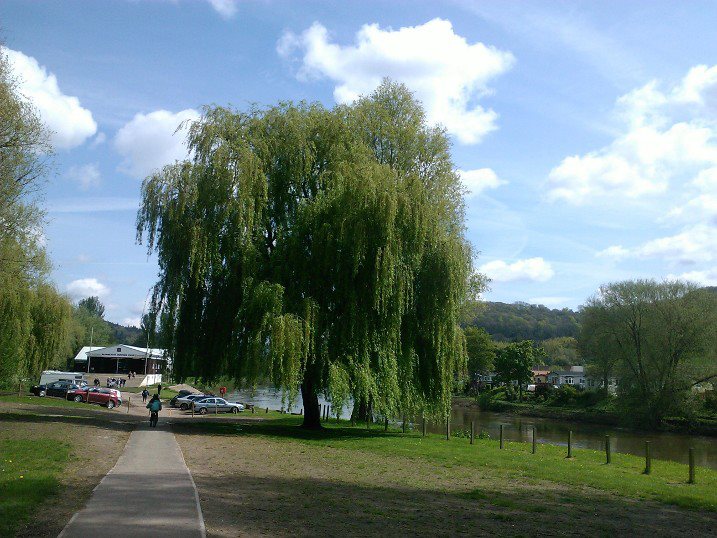
our camper van parked by the boathouse on the WyeThe path alongside the River Wye offers a varied, scenic, level route with plenty to see along the way, distracting my brain from just how far I’m running. The sky is cornflower blue, the grass a lush Granny-Smith green after all the rainfall, and the river is rushing by high and fast.

There’s surprisingly little mud along the way, considering we’ve just emerged from the wettest April on record. Eager teams of rowers are issuing forth from the boathouse, alongside which we’ve parked our camper van. They are swept along at a ferocious pace. Their return journey will tax their arm muscles, for sure.

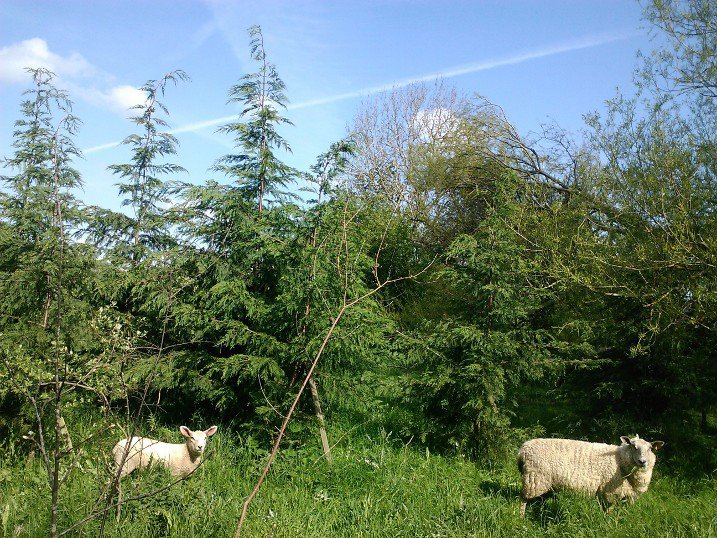
sheep in a field by the River  Wye in MonmouthWatching the rowers is one of the great pleasures of this run. There are also plenty of creatures that are watching me. Sheep and cows turn their heads as if synchronised, as if to monitor my progress through their particular fields. Ducks and swans, gliding gently by, look slightly pityingly at my less graceful progress. Their silent sailing makes my running seem all too clumsy and energy-inefficient.

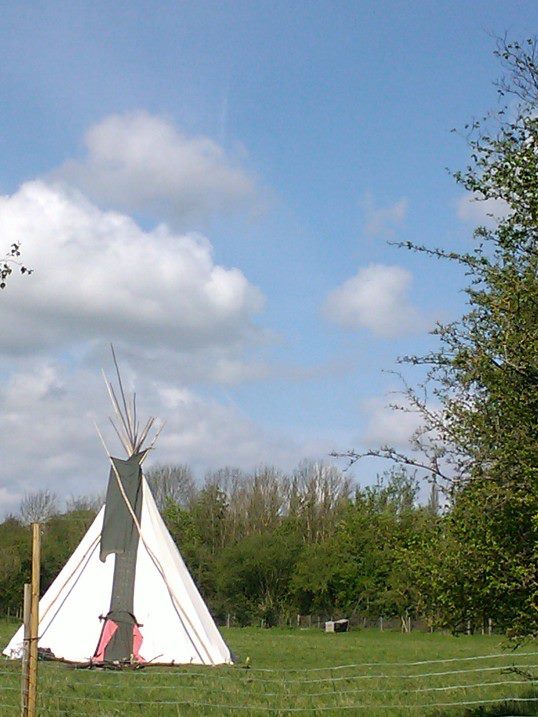
a Red Indian style tipi in a field on the River WyeI know this route well, field by field,  but, as ever, my run is not without surprises. As I enter a field that is usually empty of everything but pasture, I am startled to discover that since my last visit it’s been colonised by Red Indians. But then I spot an array of 4x4s nearby and I realise that these are not Pawnees but townies, following the latest camping trend. I wonder how they got their tent-poles in these cars.

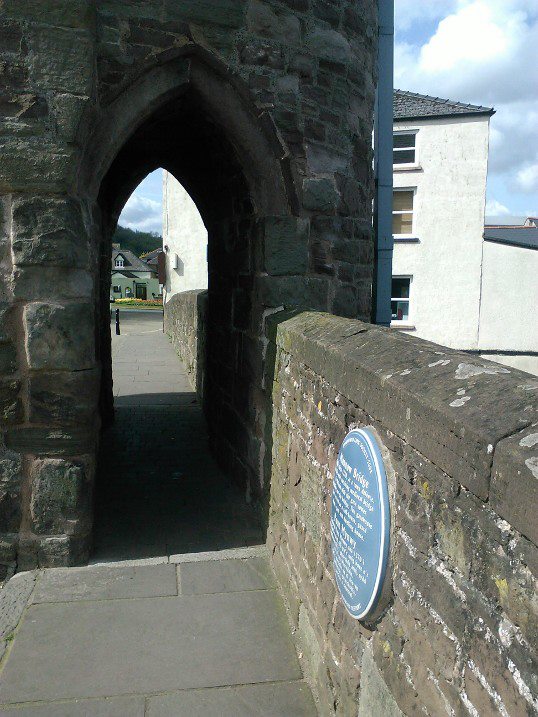
photo with view through the gatehouse on the Monnow Bridge, MonmouthThis is indeed a timeless route, surrounded by a sense of genuine history, both cultural (I’m thinking of you, Mr Wordsworth) and imperial (pay attention,  Offa, and Admiral Nelson). I cross bridges ancient and modern, running through the narrow gatehouse on the landmark Monnow Bridge. A blue plaque informs me that the Monnow Bridge was built in 1270 and is the only medieval bridge in Britain to support its own gatetower. And, my overseas readers, I mean Britain, not England: as the Welsh translation reminds me, we are in proudly Welsh territory here. (Yes, Owain Glyndwr, I haven’t forgotten you either.)  I’m so overwhelmed that I add a few loops to my run so that I can cross this unique bridge several times more.

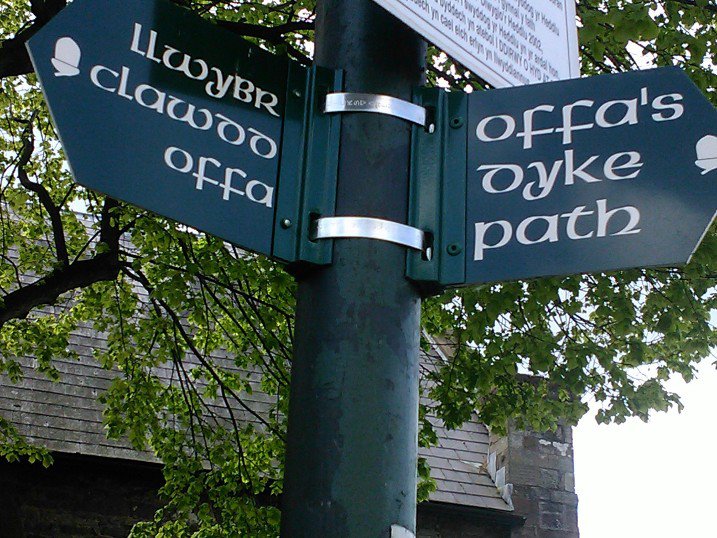
bilingual sign for Offa's Dyke PathBeyond the Monnow Bridge, I travel further back in time, reaching a stretch of Offa’s Dyke Path. Very loosely speaking, this is Wales’ answer to Scotland’s Hadrian’s Wall, only a few hundred years newer.

In all, I think I cross the Monnow seven times, but with hindsight I think it must have been six or eight, or else I’d still be on the other side of it.

old bridge across the MonnowIt beats me how an athletics track or treadmill can hold anyone’s interest when our countryside is awash (lately quite literally) with such scenic routes, all free to access. This run is satisfying on so many levels: luscious fresh air, stunning scenery, pensive solitude, and an inescapable feeling of being a part of national history. The whole experience is enormously life-affirming.

church near MonmouthExcept when  I’m passing the beautiful, tiny medieval church whose churchyard borders the river the other side of the boathouse. Its whitewashed walls are luminous in the morning’s brilliant sunshine. If I were an artist, I’d want to whip out an easel and capture nature’s bright blues and greens that set it off so well. But then I notice, also glinting in the sun, two shiny new gravestones at my feet: these weren’t here last time I ran this route, less than a year ago. I pick up  my pace and scarper. It feels very good to be alive.

If you enjoyed this post, you might like this piece about Running  In Wonderland or this one about our walk along more of  Offa’s Dyke Path

Posted in Travel

Signally Challenged In Scotland

New Mobile Cell Phone Technology

If you think the mobile phone signal in Hawkesbury isn’t great, you should try touring the coast of Scotland. In our week long trip around Fife (that’s the bit that sticks out to the right above Edinburgh), there was hardly a day went by when I could text or call home. Even my usual Hawkesbury tricks – holding the phone above my head or next to a window – would not  persuade a single one of those aggravating little bars turn black. If we’d been in the Scottish Highlands, I’d have understood the problem: no line of sight contact with mobile masts. Those pesky mountains do get in the way sometimes.

I was once involved in a BBC outside broadcast at Westonbirt Arboretum. The technical guy complained that the proximity of tall trees was the one thing to avoid when trying to make a transmission. (Cue to sack the location scout!) But when you’re in treeless ground at sea level, there really is no excuse.

Mary, Queen of Scots

Ironically, we encountered on our coastal tour some surprisingly successful communication feats using old technology. While imprisoned in Lochleven Castle, Mary, Queen of Scots used her pearl earrings as a signal – she gave them to a secret messenger to send back to her as proof that his mission had succeeded.

RRS Discovery English: Museum ship RRS Discove...

The intrepid polar explorers who joined Captain Cook on the RRS Discovery (now a floating museum in Dundee) packed rockets to use as distress signals. They didn’t seem to have an alternative for good news.

Bell Rock Lighthouse

But my favourite was the system used by Robert Stevenson’s Bell Rock Lighthouse, built 200 years ago 11 miles off the coast of Arbroath. To indicate to those on dry land that all was well, the lighthouse keepers had to hoist a large brass ball to the top of the lighthouse tower each day. If on any day the ball did not appear, shore staff assumed there was a major  emergency at the lighthouse (e.g. serious illness or death of the keepers) and sent out a rescue boat. There was only one tale of an unnecessary emergency mission: when a large seabird nested in front of the light, obscuring the view of the ball.

So even the least technical solution isn’t failsafe. I think I’ll stick with my mobile. And dry land.

~~~~~~~~~~~~~~~~~~~~~~~~~~~~~~~~~~~~~~~~~~~~~~~~~~~~~~~~~~~~~~~~~~~~~~~~~

(All photos by Wikipedia – must get my camera fixed!)

This post was originally written for the May issue of the Hawkesbury Parish News.

If you enjoyed this article about my recent Scottish trip, you might also enjoy this one:

Dorothy Was Right: There’s No Place Like Home 

 or this one:  New Respect for Old Fishwives

Posted in Travel

A Funny Thing Happens When I Run: Introducing the Reverse Raindance

Me and my daughter in a summer fun runI’m a fair-weather runner. My running shoes hibernate in the wardrobe from November to February, to spare me from running in the worst of the winter weather. But with the wettest April since records began now segueing into an equally soggy May, there’s a slim chance of dodging raindrops on the run.

Or so you might think. But in the last few days, I’ve discovered I have a King Canute-like ability to turn the tide of imminent downpours, simply by donning my trainers and hitting the road.

Raindrops falling on water
Raindrops falling on water (Photo credit: Wikipedia)

Last Saturday, I was scheduled to take part in a four-mile fun run in the next village. On the preceding Thursday and Friday, the rain had been falling in torrents. I wondered whether I’d be better off in a swimsuit than a tracksuit. I carefully packed a raincape for the run and a complete change of clothing, expecting to peel off sopping kit as soon as I crossed the finish line.

I drove to the starting point, windscreen wipers on full speed, headlights on, careering through puddles half the width of the roads. The race had been limited to 30 entrants, for fear of overcrowding, but thanks to the weather, only three, apart from me, turned up. The other three looked very pleased to see me. I gulped. There was no turning back.

And yet, by the time we padded off up the hill at the start of our four-mile circuit, the rain had just about vanished. We plodded on companionably, enjoying the inimitable freshness that emanates from fields after heavy rain. The weather was cool but comfortable, and when we arrived back at the village hall, we were pleasantly warm – and dry. Yet on the drive home, I had to turn my windscreen wipers on again.

Français : Temps d'orage sur la Vézère, en Dor...
(Photo credit: Wikipedia)

Then last night, I went to join the local running club’s evening run. As I drove down the hill, steely grey clouds were hanging ominously over the clubhouse. It was drizzling as I parked the car. I took this to be an overture to a drenching. But once my run began, the same thing happened as on Saturday. The storm clouds held back; there was not a drop of precipitation. On the return leg, there was even a glimpse of the sun. But no sooner had I got home and kicked off my running shoes than great sheets of lightning began to fill the sky in the direction of where I’d been running. Thunder rumbled on for some time.

So I’m coming to the conclusion that my running has the effect of a reverse raindance. This could come in very handy.

Rain dance - NARA - 285623
Rain dance in Kansas, 1920 (Photo credit: Wikipedia)

Now, I realise that by going public with my new-found talent, I’m probably going to jinx it. (First rule of Reverse Raindance Club: Don’t Talk About Reverse Raindance Club.) Expect a follow-up post from me any time soon detailing how I’ve been struck by lightning on my latest run or had to swim home through a monsoon.

But I hope not, and just for selfish reasons. Think of the public good that I could do! This Wimbledon season, the British Lawn Tennis Club could hire me to run round the courts whenever the weather looks murky. If I sprint about Lords Cricket Ground now and again, rain need never stop play. And as to the London Olympics, well, let the sun shine.

Badminton Horse Trials logo

It’s a shame I didn’t discover this talent earlier. I live near the  Badminton Estate, where the most famous equestrian event in the world was meant to be taking place this weekend. For the first time in 25 years, it’s had to be cancelled because their land is waterlogged. If they’d just let me run around their course for a bit, I could have saved them the bother. But it’s just as well they didn’t ask me – I’m not sure I’m up to the jumps.

Some of my other posts about running:

Running In Wonderland (You Can Call Me Alice)       Keeping Up With My Sporty Daughter

And if you enjoy any of these posts, please consider sponsoring my Bristol 10K run later this month! I’m raising money for research into a cure for my daughter’s Type 1 Diabetes here. Thank you!